How do I find my personal style?
Find your personal style by looking backwards before looking forwards. List the ten outfits you've felt best in, collect thirty images you'd genuinely wear, then extract the repeating elements — silhouette, palette, fabric, level of polish. The overlap between what you already repeat and what you keep saving is your style. Write it as one sentence and use it as a filter for everything you buy.
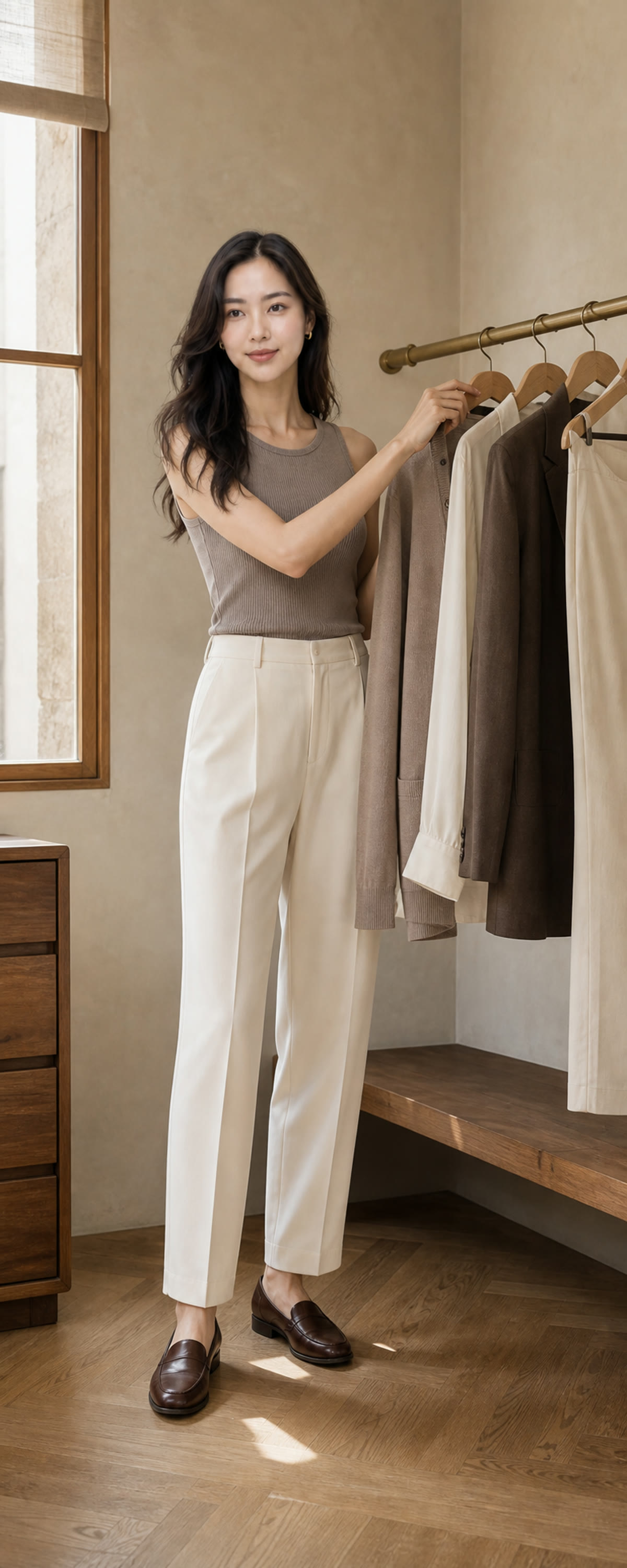
How It Works
- Save inspiration in one place. Import Pinterest pins and screenshots. minniie reads recurring silhouettes, palettes and levels of polish across the whole set.
- Compare it to your real wardrobe. minniie contrasts your saved inspiration with what you own and shows the overlap — plus the pieces pulling in a different direction.
- Wear the direction, don't just describe it. Get daily outfits built to that style from clothes you already own, and see them on your own photo before you commit.
What You Get
- Start with evidence: your most-worn and best-feeling outfits from the last year.
- Collect 30 inspiration images and delete any you wouldn't actually leave the house in.
- Extract patterns: silhouette, palette, fabric, polish level, accessory habits.
- Name it in one sentence — a filter, not a label.
- Test the sentence against your closet: which pieces contradict it?
- Adjust for your coloring so the palette flatters as well as fits.
- Re-test every six months; style evolves, the method doesn't.
Personalized example
Question: Help me figure out my personal style from my saved images and my closet.
- Your inspiration is 80% tonal neutrals, relaxed tailoring, flat shoes — low contrast, high polish.
- Your wardrobe matches about 60% of that; the mismatch is a cluster of bright printed tops.
- One-sentence filter: 'relaxed tailoring in warm neutrals, minimal jewellery, always a flat shoe.'
- Three outfits from your closet that fully express it, and two pieces worth reselling.
Aesthetic labels are a starting point, not an answer
Clean girl, old money, soft girl — these are useful shorthand for a palette and a level of polish, and useless as a wardrobe plan. Nobody dresses inside a single aesthetic all week, and forcing it produces a closet that only works on your best days.
Use the label to describe your direction, then translate it into concrete rules: this hemline, these three neutrals, this shoe, this amount of jewellery. Rules survive contact with a Tuesday.
Your coloring is part of your style
Two people can share an aesthetic and need completely different palettes. The same minimalist uniform is stone and camel on one person and charcoal and pure white on another — same style, different contrast.
Running a color analysis before you commit to a palette prevents the most expensive mistake: a coherent wardrobe in shades that quietly drain you.
Practical checklist
- List 10 outfits you've felt best in
- Collect 30 images, cut anything unwearable
- Extract silhouette, palette, fabric, polish
- Write your style as one sentence
- Audit your wardrobe against it
- Confirm the palette suits your coloring
Frequently Asked Questions
- How do I find my personal style if I like everything?
- Filter by wearability, not admiration. Keep only the images you'd actually leave the house in, and cross-reference them with the outfits you already repeat. Liking a look and wearing it are different signals — style lives in the overlap.
- What if my style doesn't match my body or lifestyle?
- Keep the palette and mood, adjust the silhouette and practicality. Almost every aesthetic can be translated into a version that works for your proportions and your week without losing what drew you to it.
- How long does it take to find your personal style?
- The analysis takes an afternoon; the confidence takes a few months of wearing it. The point is to stop restarting from zero every season — a written filter makes each purchase compound instead of scatter.
- Can an AI stylist help me find my style?
- Yes, when it can see both your inspiration and your actual wardrobe. minniie extracts the pattern across your saved images, compares it to what you own, and builds outfits in that direction from real pieces.