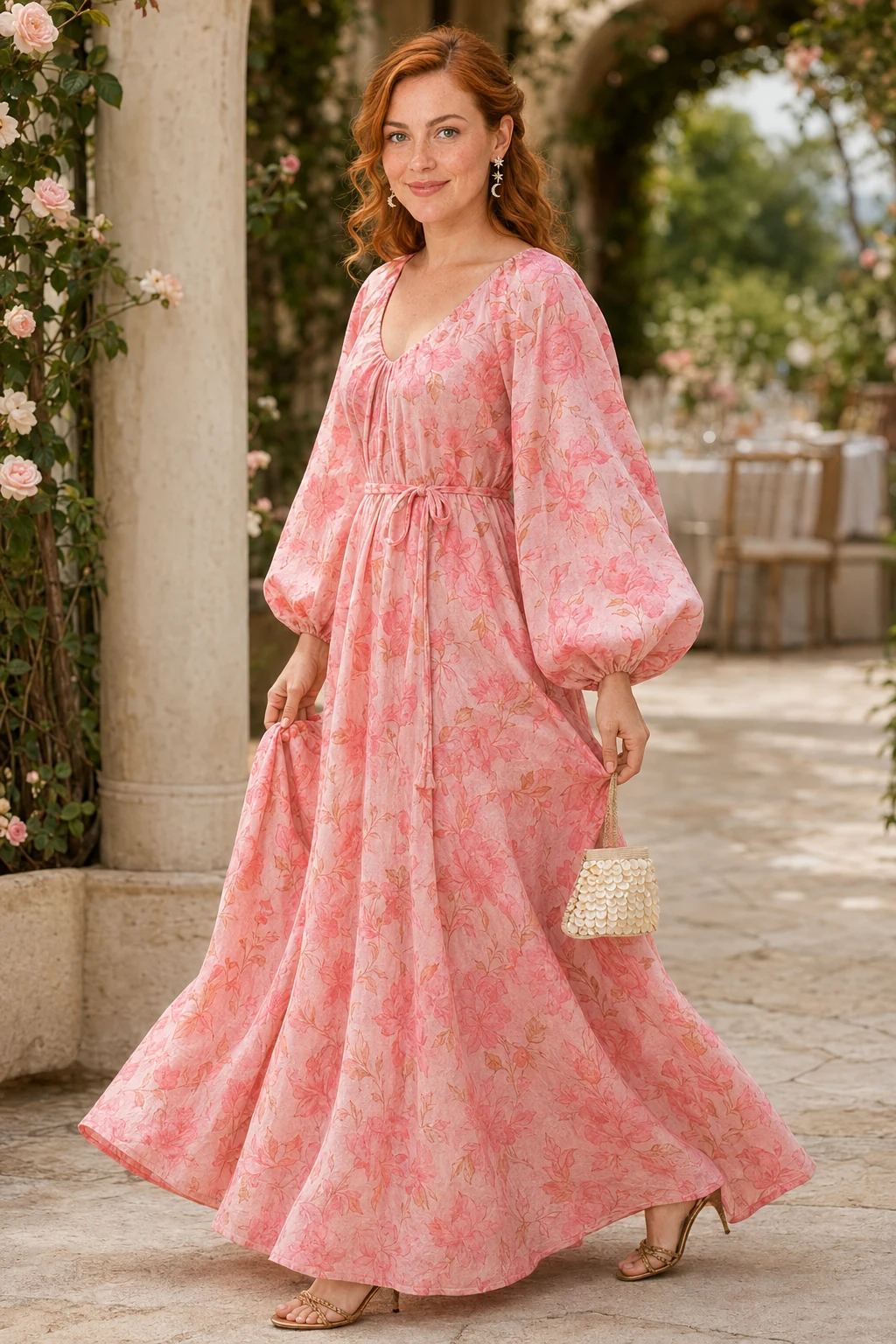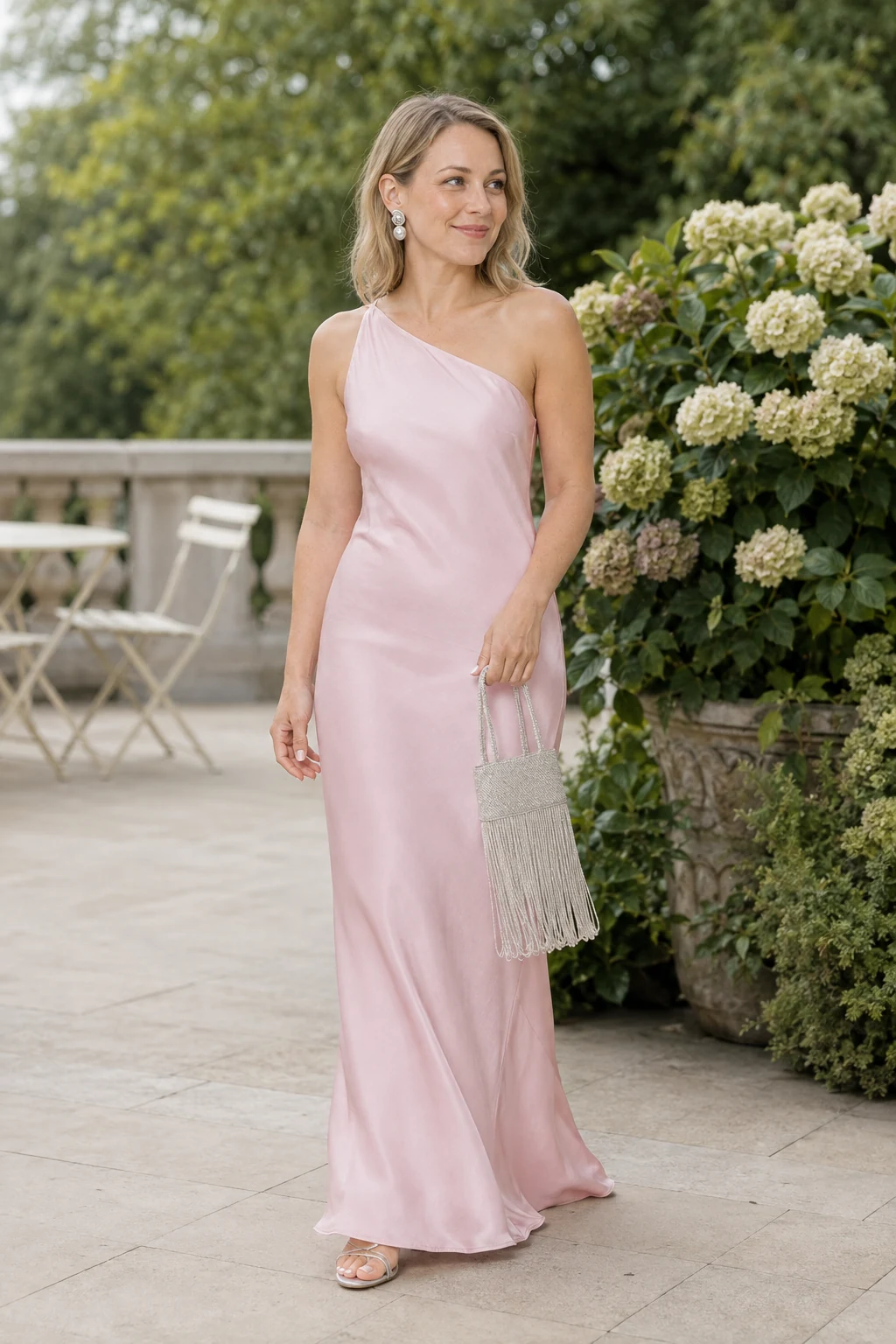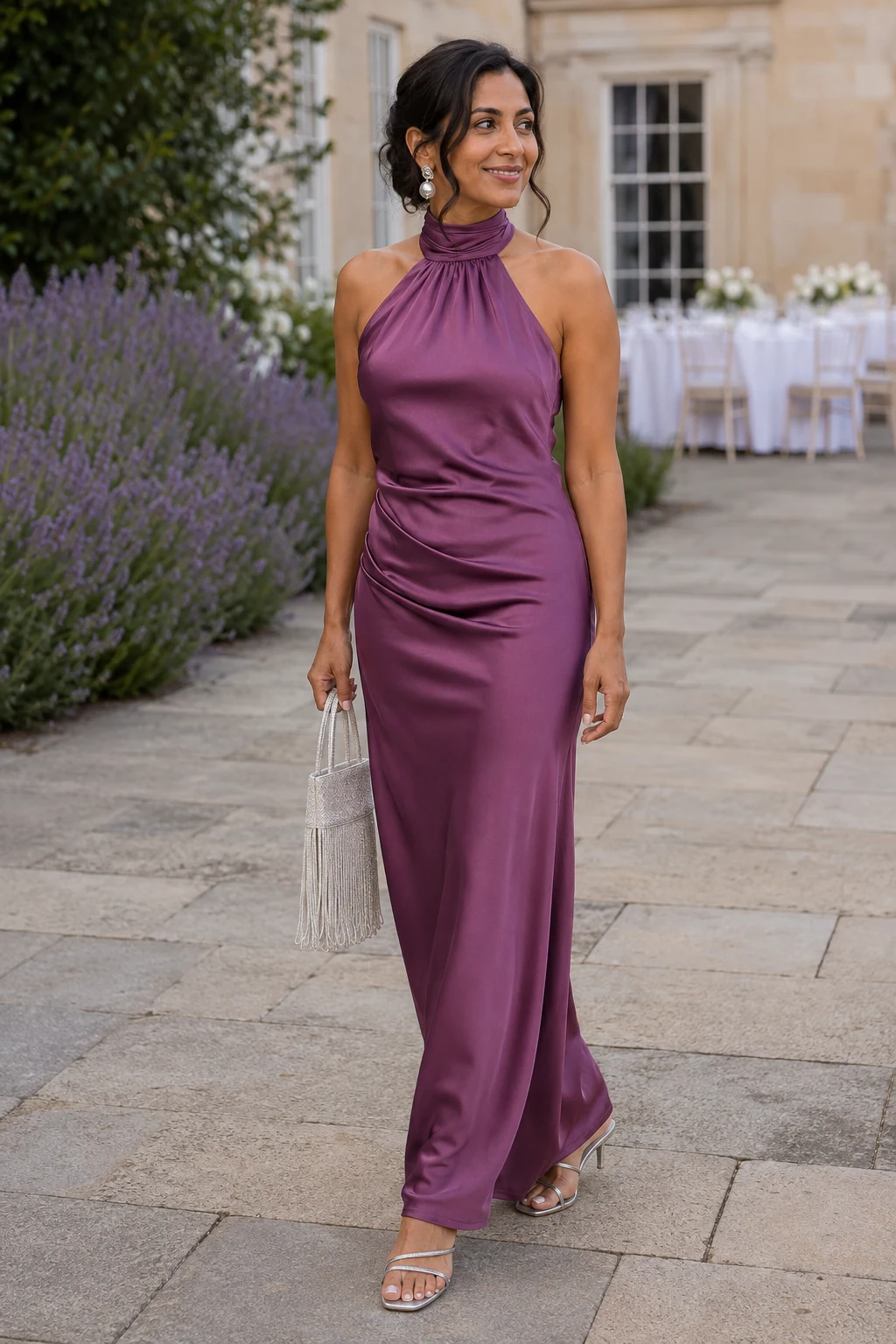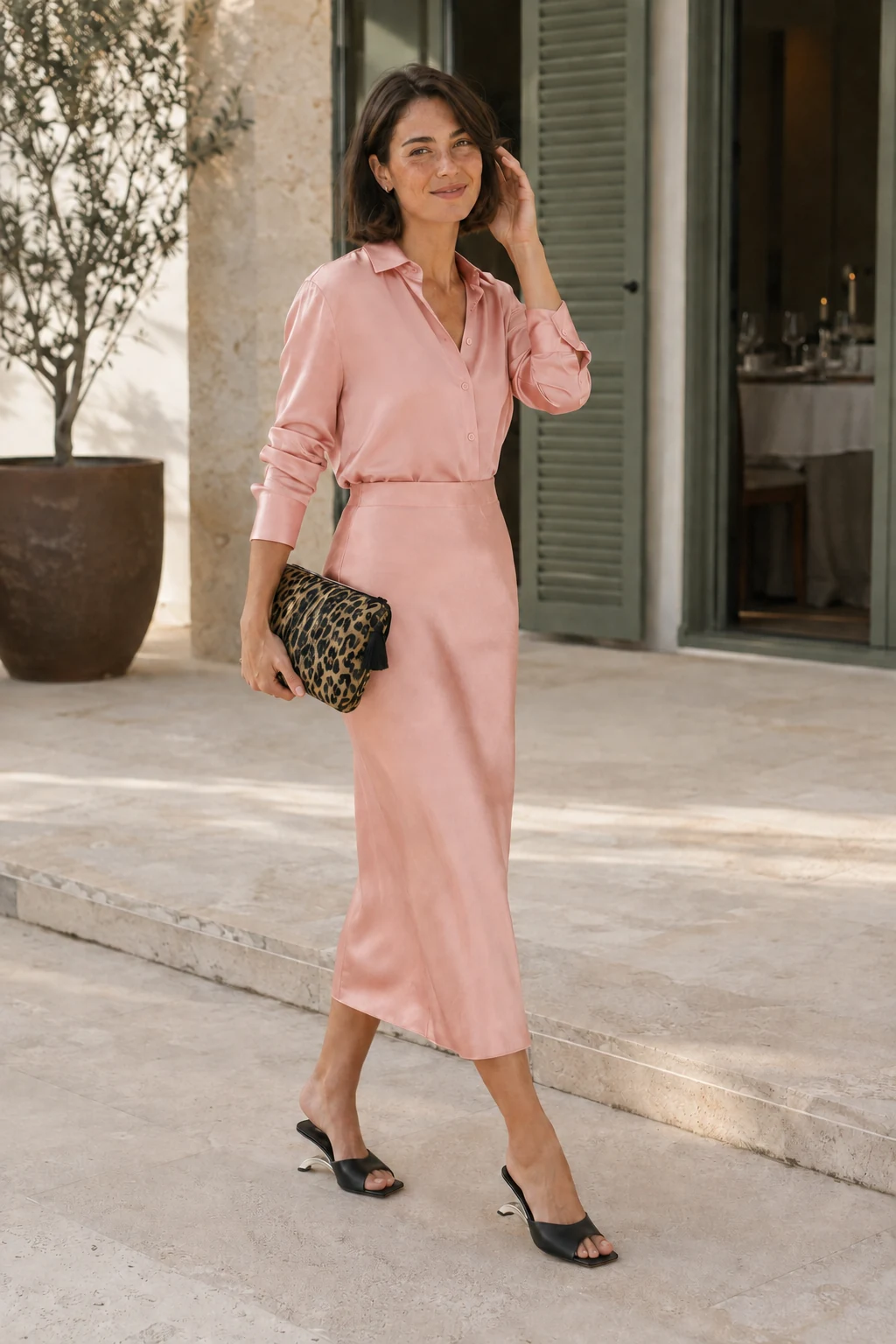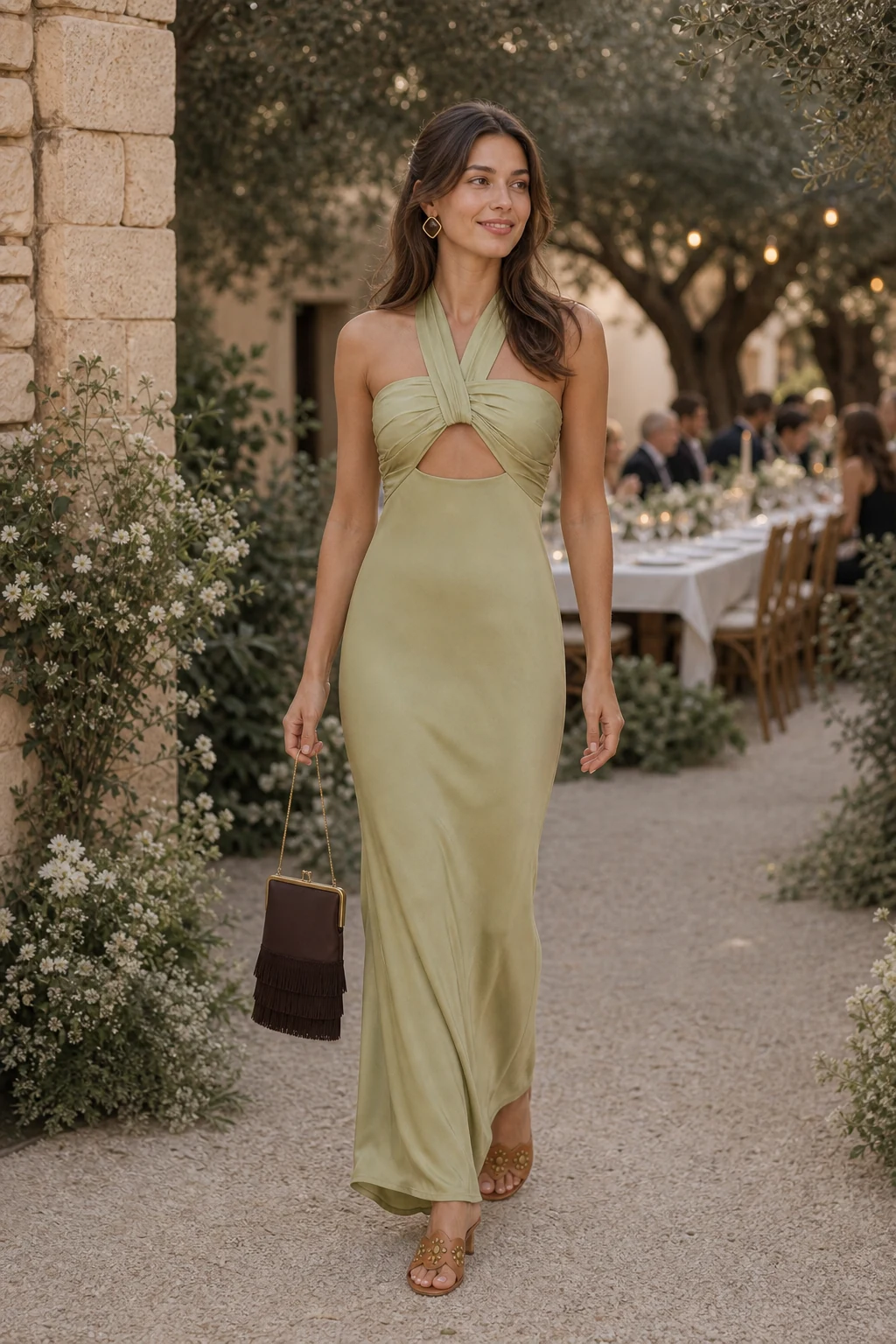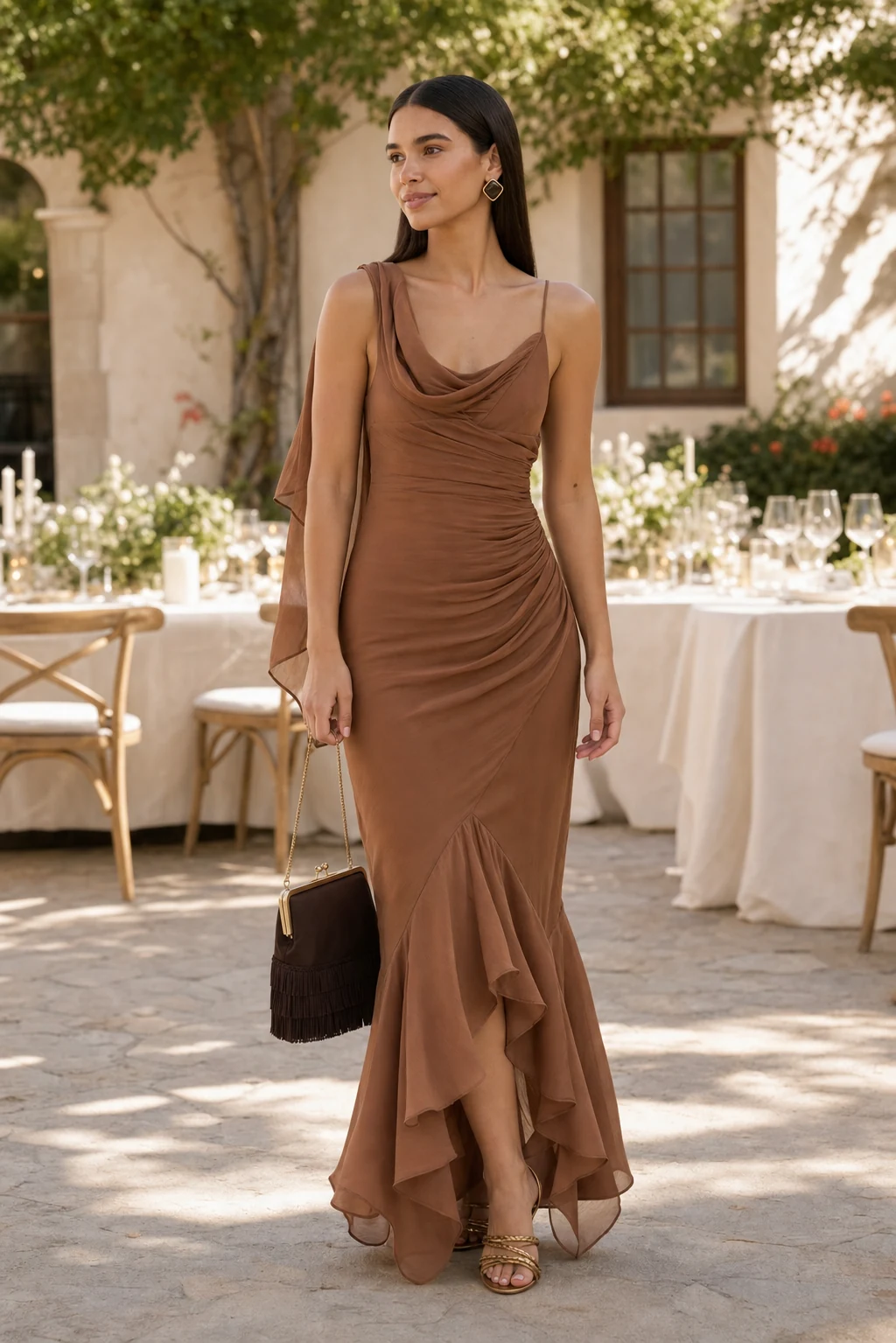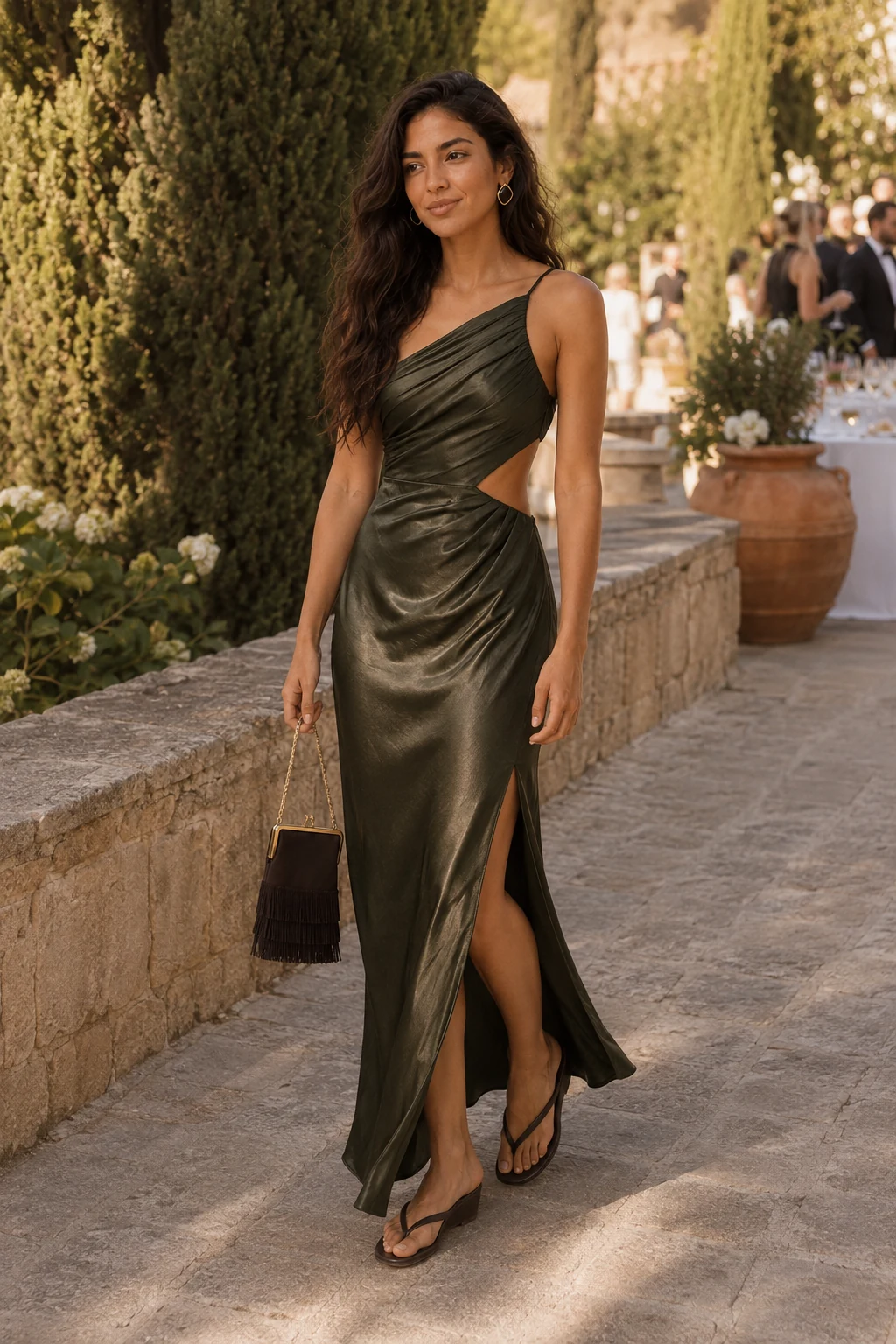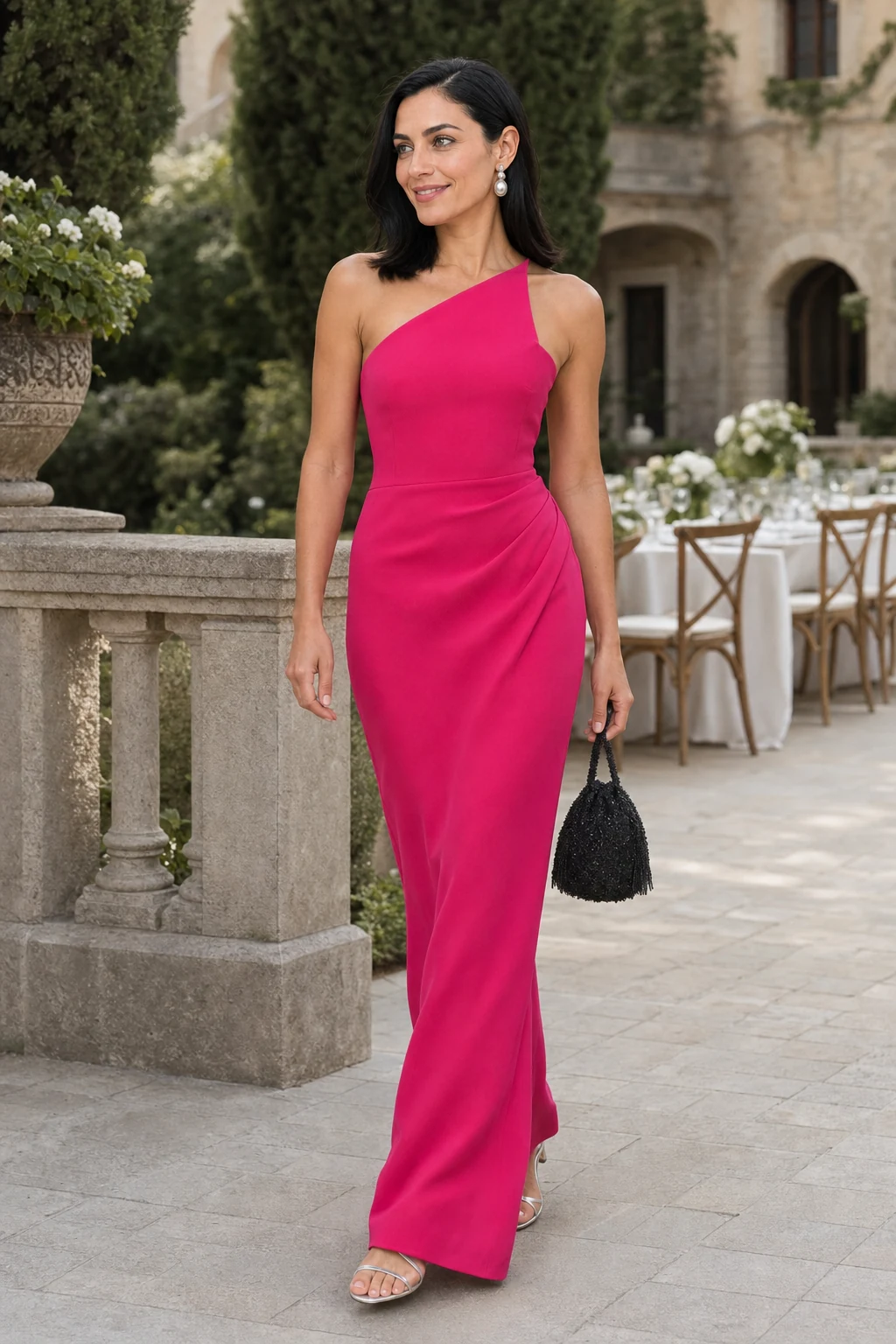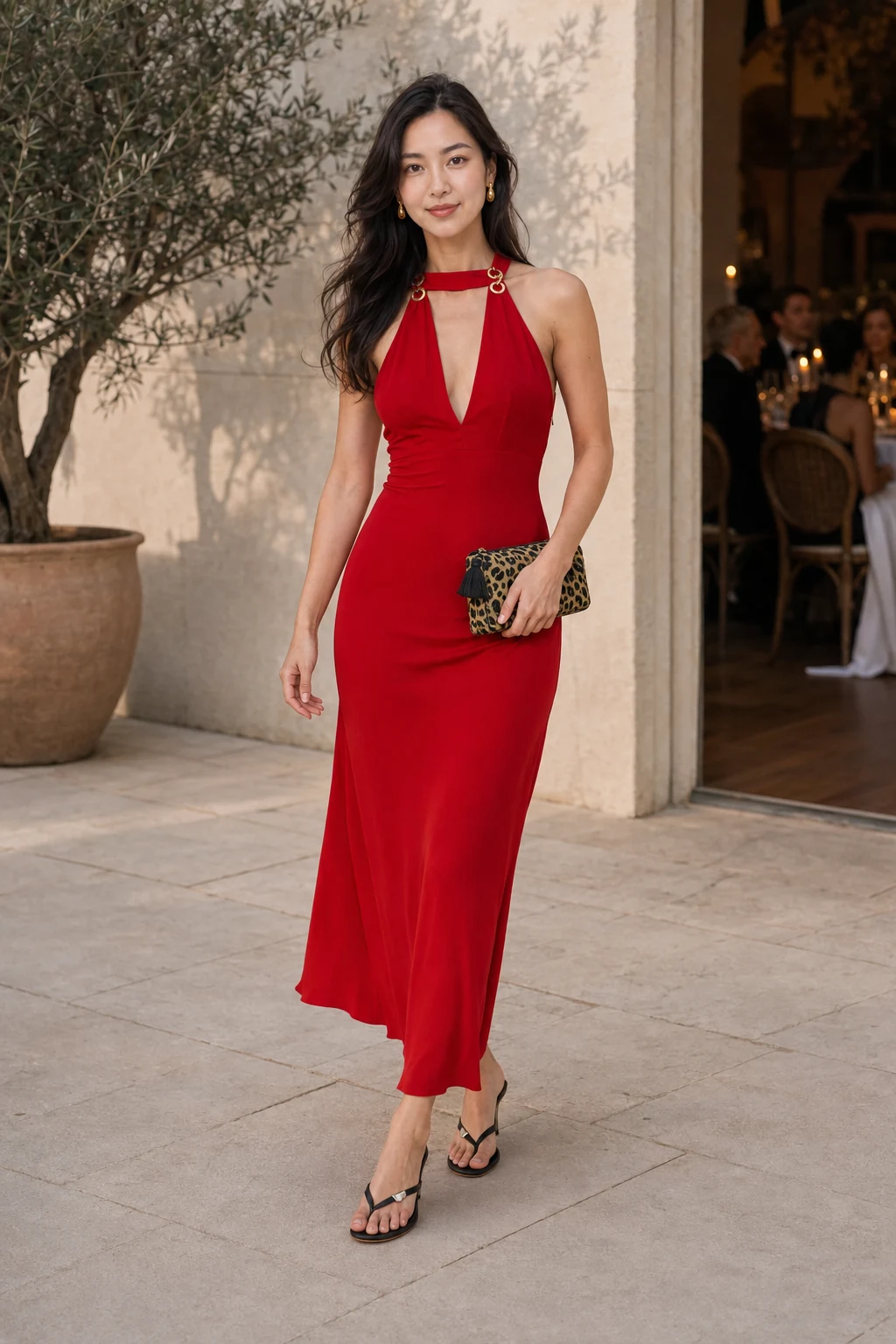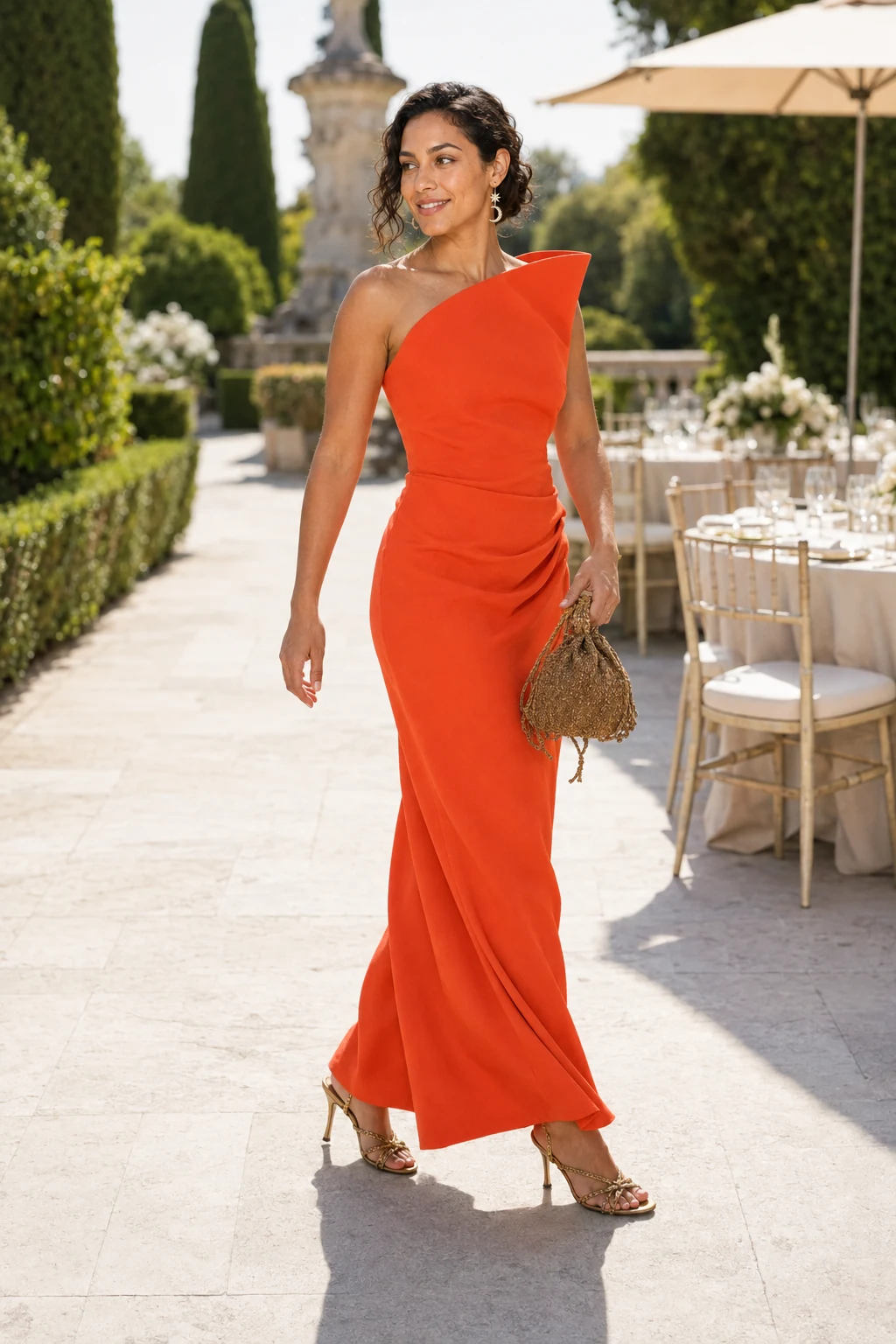
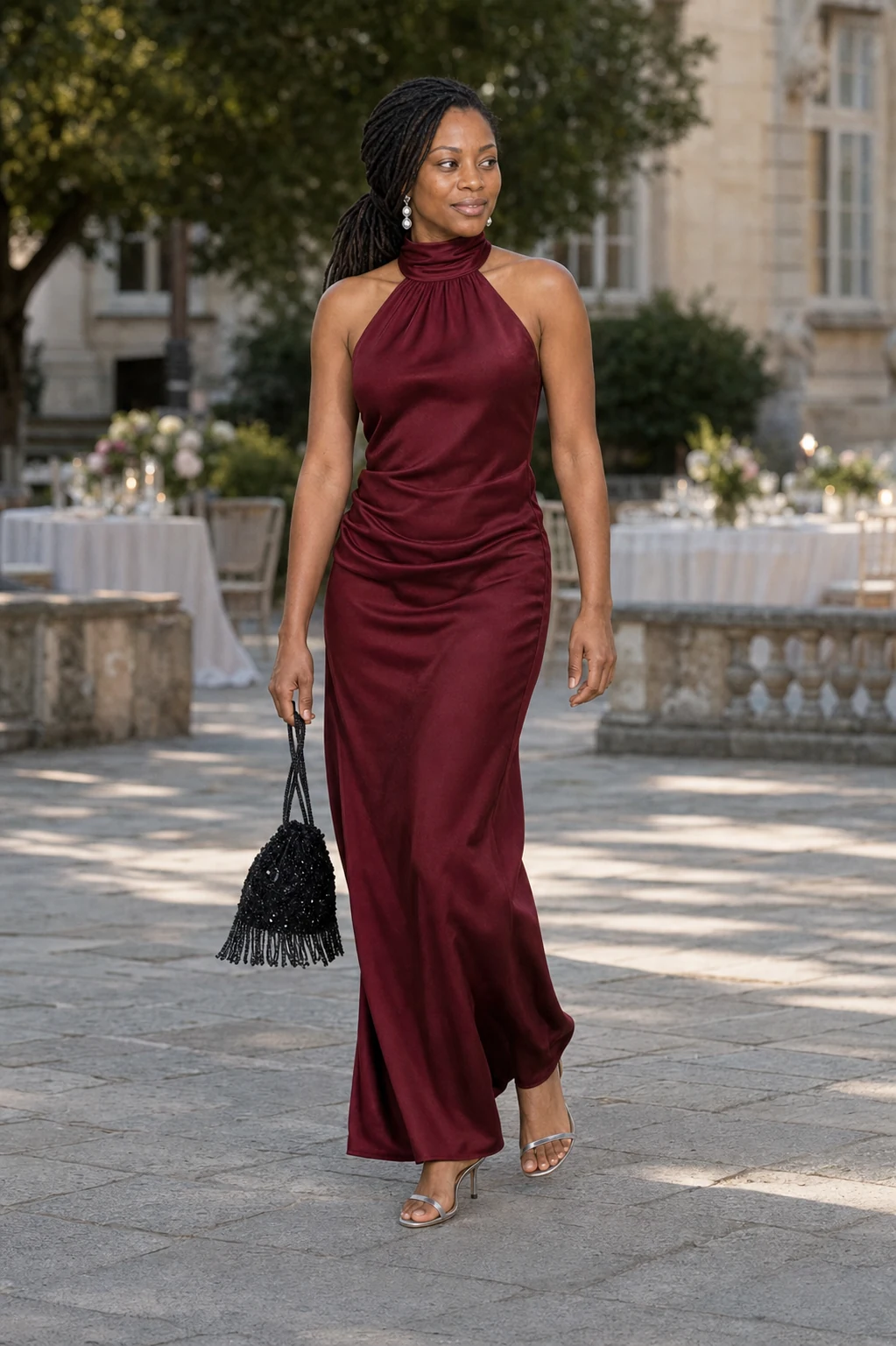
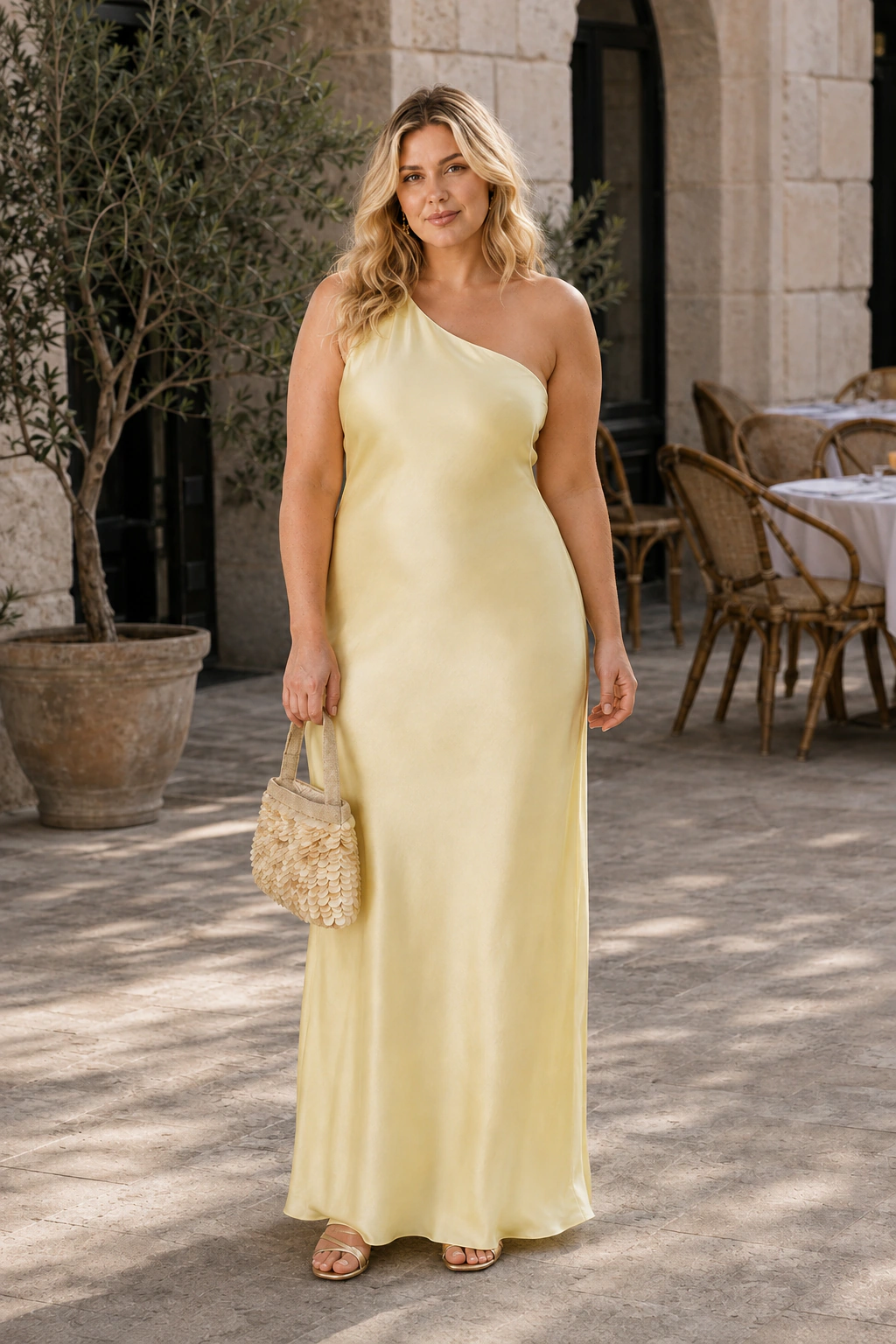
Light Spring
Apricot silk, warm aqua and delicate gold
- Apricot
- Warm aqua
- Light coral
- Apple green
- Warm pink
The occasion edit / 12 colour seasons
A dress you love. Colours that suit you. An outfit with a life beyond one invitation.
96 outfits · Dresses & two-piece sets · The finishing touches
The colour comes first
Start with the wedding's dress code and venue, then choose a dress or coordinated set in your color season. Springs can explore clear warm colours, Summers softened cool colours, Autumns earthy warm colours, and Winters clear cool colours with more depth or contrast. Your exact subtype refines the choice. Avoid white-looking guest outfits unless the couple requests them, and finish with shoes, a bag and jewellery that suit the whole look.
The shades in each edit are chosen for the warmth, depth and intensity of that colour season. Explore your palette, then choose the silhouette and finishing touches that feel like you.
AI-generated adult models illustrate the styling. Each guide includes official retailer photographs and links to the exact colourways.
Find your palette
Apricot silk, warm aqua and delicate gold
Melon, fresh green and sunlit gold
Poppy red, turquoise and a sharp silhouette
Cornflower, lilac and soft silver
Raspberry, blue-grey and a fluid line
Dusty mauve, blue sage and brushed silver
Sage olive, muted terracotta and antique gold
Copper, olive and rich warm teal
Chocolate, oxblood and deep olive
Fuchsia, cobalt and polished silver
Cool red, sapphire and a silver finish
Midnight, deep berry and cool emerald
The styling notes
A wedding invitation is a good reason to dress beautifully. It is not a reason to buy an outfit you will feel unlike yourself in, or a dress that will spend the next five years waiting for another occasion. Start with the level of formality, the setting and the pieces you already own. Then use your colour season to narrow the enormous range of dresses and separates into a more personal edit.
The colours highlighted in each guide are some of the best starting points for that colour season. We chose them for their balance of warmth or coolness, lightness or depth, and softness or brightness. Those qualities help a colour feel harmonious beside your face. Each season guide explains why its palette works, then shows how to wear that colour direction through dresses, coordinated sets and accessories.
Colour analysis is a styling framework rather than a fixed set of rules. Your skin depth or ethnicity does not determine a season on its own; comparing colours beside your face in consistent light is more useful than assumptions based on a single feature. Use your palette to find flattering options while leaving room for your personal taste.
The season names also have nothing to do with the date of the wedding. A True Autumn can wear warm teal at a July celebration, and a Light Summer can wear cornflower at a December ceremony. Adapt the fabric, coverage and layers to the weather, while keeping the colour relationships that you enjoy.
The wedding brief
Start with the invitation, refine the colour, then test how the complete outfit looks and feels in real life.
A colour-perfect dress can still be wrong for the event. Check the requested formality, ceremony coverage and venue first. A city cocktail wedding, a black-tie reception and a barefoot beach celebration ask different things of a garment. If the wording is unclear, ask the couple or the person handling guest questions rather than guessing from a photograph of the venue.
Light Spring and Bright Spring are both warm-leaning, but they do not need the same colour intensity. Soft Summer and Soft Autumn share softness, while their temperature differs. Use the individual guides to understand those distinctions instead of shopping only by the four broad season names.
A retailer's 'sage', 'rose' or 'forest' is a product label, not a standard colour measurement. Compare its official photographs and the selected variant. Screens, lighting, fabric sheen and editing can all shift the impression. The final check is the actual garment in daylight, with your intended accessories and underlayers.
Choose one main focal point. A detailed halter may need earrings and no necklace; a simple strapless neckline may allow a more sculptural earring. Balance the bag and shoe with the dress's fabric and shape, then check the full outfit standing, sitting and moving.
Before buying, name two occasions beyond this wedding and two outfits using pieces you already own. A simple silk skirt can work with a cotton shirt; an occasion top can work with denim. A dress may be equally useful if you already attend dinners or celebrations where you would enjoy wearing it again.
The practical edit
The details that make an outfit feel right for the invitation, comfortable through the day and useful after the wedding.
For cocktail dressing, a refined midi, an elegant shorter dress or a polished coordinated set can be a useful starting point. Fabric, fit and accessories do much of the work. A long beach skirt with a very casual top is not automatically dressy because the hem reaches the floor.
Formal and black-tie invitations need closer attention. A full-length evening dress is a familiar choice; an elevated set may work when its construction, fabric and the couple's expectations support it. Do not assume that every maxi is formal, or that every two-piece meets black tie. Check any specific instructions from the hosts.
For a garden or destination wedding, consider the surfaces and weather as carefully as the dress. Thin heels can sink into grass; long hems can catch on cobbles; a heavy lining can be uncomfortable in heat. A stable sandal or dressy flat and a carefully adjusted hem can make the outfit much easier to enjoy.
Unless the couple has asked for it, avoid a guest outfit that reads mainly white, ivory or bridal. Pale champagne, very light yellow and icy pastels need particular care because reflective fabric and bright exposure can make them look whiter. A clearly coloured alternative removes that uncertainty.
Red, black and particular traditional colours have different meanings across cultures and celebrations. The couple's instructions take priority over a generic fashion rule. If a colour is significant to the ceremony, choose another option within your palette rather than treating colour analysis as permission to ignore the context.
Check neckline depth, cut-outs, slit height and opacity in movement. A church or other religious ceremony may require a wrap or more coverage; an outdoor reception may simply become cold. Choose the layer with the outfit, so it looks intentional and performs the job you need.
The most useful starting point is your existing wardrobe. Restyling a dress, borrowing an evening bag or renting a garment you expect to wear once can avoid an unnecessary new purchase. If you do buy, choose a piece whose fit, colour and care requirements suit your life.
A coordinated set offers more combinations because its top and bottom can be worn separately. That flexibility can support more frequent wear, but it does not make every set inherently sustainable. Materials, production, transport, care and how long you actually keep wearing the pieces all matter; this guide does not claim a measured environmental saving from an outfit photograph.
Try a wedding skirt with a cotton shirt, a plain tee or a fine knit. Try the top with jeans or tailored trousers. For a dress, change the shoe, remove the evening jewellery and add a cardigan or simple jacket where the shape allows it. If none of those combinations feels natural, a different piece may serve you better.
Try the complete outfit with the shoes, underwear and bag you will use. Sit through a few minutes as you would at dinner, raise your arms, walk up a step and check the back in a mirror. A top that lifts away from a matching skirt, a strap that slips or a lining that catches is easier to fix before the day.
For a long dress or skirt, check the hem in the actual shoes. If you plan to switch to flats, account for that change in height. Test whether the bag holds your essentials and whether the earrings remain comfortable. These small practical decisions make a polished outfit feel effortless to wear.
The details, answered
Yes, when the set meets the invitation's dress code. Choose coordinated fabric, secure coverage and an appropriately dressy cut, then finish with an evening bag and polished shoes. Check that separately sold tops and bottoms are both available in the intended matching colour. Formal and black-tie weddings may require a more elevated set or a gown.
No. Your colour season is a styling palette, not a calendar rule. Adapt the fabric, layers and shoes to the weather and venue, then choose colours you enjoy within your palette.
Yes. Colour seasons are guides rather than restrictions. If you love a dress outside your usual palette, assess the complete outfit in daylight and use accessories near your face to create a combination you enjoy.
Not automatically. Separates may offer more ways to rewear each piece, but environmental impact depends on production, materials, care and actual use. Restyling what you own, borrowing or renting can be useful alternatives to buying a new outfit.
Dressy flats can work with many wedding outfits. Choose a finish and shape that suit the requested formality, and adjust a long hem for the shoes you will actually wear. For grass or uneven ground, a stable flat may be more practical than a thin heel.
No. Skin depth, ethnicity, hair colour or eye colour alone does not establish a season. Colour analysis considers relationships in temperature, contrast and intensity; lighting and photo processing can also affect an assessment.