"><g><g clip-path="url(%231b309c4b36)"><g fill="%23ea2303" fill-opacity="1"><g transform="translate(19.57737, 104.511811)"><g><path d="M 53.15625 -42.015625 C 54.164062 -41.691406 54.882812 -41.109375 55.3125 -40.265625 C 55.550781 -39.847656 55.296875 -38.773438 54.546875 -37.046875 C 53.796875 -35.328125 52.835938 -33.320312 51.671875 -31.03125 C 50.515625 -28.738281 49.320312 -26.53125 48.09375 -24.40625 C 44.925781 -18.707031 42.25 -14.367188 40.0625 -11.390625 C 37.882812 -8.410156 35.910156 -6.335938 34.140625 -5.171875 C 32.828125 -4.410156 31.835938 -3.953125 31.171875 -3.796875 C 30.285156 -3.597656 29.285156 -3.726562 28.171875 -4.1875 C 26.828125 -4.582031 25.851562 -5.179688 25.25 -5.984375 C 24.644531 -6.785156 24.160156 -8.003906 23.796875 -9.640625 C 23.460938 -11.117188 23.347656 -12.765625 23.453125 -14.578125 C 23.554688 -16.390625 23.984375 -18.921875 24.734375 -22.171875 C 25.492188 -25.421875 26.648438 -29.863281 28.203125 -35.5 C 28.441406 -36.1875 28.609375 -36.753906 28.703125 -37.203125 C 28.796875 -37.648438 28.851562 -37.988281 28.875 -38.21875 C 28.632812 -37.9375 28.285156 -37.488281 27.828125 -36.875 C 27.378906 -36.269531 26.796875 -35.347656 26.078125 -34.109375 C 25.429688 -33.109375 24.769531 -32.023438 24.09375 -30.859375 C 23.414062 -29.691406 22.910156 -28.796875 22.578125 -28.171875 C 22.316406 -27.640625 21.835938 -26.554688 21.140625 -24.921875 C 20.453125 -23.296875 19.6875 -21.394531 18.84375 -19.21875 C 18 -17.039062 17.175781 -14.867188 16.375 -12.703125 C 15.582031 -10.546875 14.9375 -8.671875 14.4375 -7.078125 C 13.476562 -4.367188 12.425781 -2.765625 11.28125 -2.265625 C 10.59375 -1.878906 9.867188 -1.835938 9.109375 -2.140625 C 8.066406 -2.609375 7.382812 -3.21875 7.0625 -3.96875 C 6.738281 -4.71875 6.726562 -5.984375 7.03125 -7.765625 C 7.332031 -9.546875 7.921875 -12.171875 8.796875 -15.640625 C 9.023438 -16.691406 9.351562 -18.085938 9.78125 -19.828125 C 10.21875 -21.566406 10.632812 -23.375 11.03125 -25.25 C 11.425781 -27.132812 11.75 -28.820312 12 -30.3125 C 12.257812 -31.8125 12.320312 -32.859375 12.1875 -33.453125 C 11.320312 -32.785156 9.757812 -30.351562 7.5 -26.15625 C 5.238281 -21.957031 2.851562 -16.578125 0.34375 -10.015625 C -1.476562 -5.242188 -2.867188 -2.046875 -3.828125 -0.421875 C -4.796875 1.191406 -6.132812 1.679688 -7.84375 1.046875 C -9.207031 0.492188 -9.945312 -0.660156 -10.0625 -2.421875 C -10.175781 -4.191406 -9.984375 -6.726562 -9.484375 -10.03125 C -9.171875 -11.75 -8.722656 -13.9375 -8.140625 -16.59375 C -7.566406 -19.25 -6.953125 -21.992188 -6.296875 -24.828125 C -5.640625 -27.671875 -5 -30.234375 -4.375 -32.515625 C -3.757812 -34.796875 -3.273438 -36.363281 -2.921875 -37.21875 C -2.210938 -38.9375 -1.320312 -40.023438 -0.25 -40.484375 C 0.53125 -40.828125 1.28125 -40.765625 2 -40.296875 C 2.851562 -39.953125 3.378906 -39.253906 3.578125 -38.203125 C 3.773438 -37.148438 3.609375 -35.898438 3.078125 -34.453125 C 2.867188 -33.941406 2.664062 -33.332031 2.46875 -32.625 C 2.28125 -31.925781 2.066406 -31.238281 1.828125 -30.5625 C 1.953125 -30.75 2.039062 -30.882812 2.09375 -30.96875 C 2.144531 -31.0625 2.203125 -31.15625 2.265625 -31.25 C 3.054688 -32.59375 3.972656 -33.984375 5.015625 -35.421875 C 6.066406 -36.859375 6.941406 -37.929688 7.640625 -38.640625 C 9.097656 -40.128906 10.46875 -41.132812 11.75 -41.65625 C 13.039062 -42.175781 14.5 -41.914062 16.125 -40.875 C 16.957031 -40.351562 17.546875 -39.835938 17.890625 -39.328125 C 18.234375 -38.828125 18.539062 -37.984375 18.8125 -36.796875 L 18.9375 -36.234375 L 20.40625 -38.5625 C 22.125 -41.289062 23.992188 -43.363281 26.015625 -44.78125 C 28.035156 -46.195312 29.851562 -46.78125 31.46875 -46.53125 C 33.675781 -46.082031 35.101562 -44.410156 35.75 -41.515625 C 35.914062 -40.773438 35.976562 -39.96875 35.9375 -39.09375 C 35.894531 -38.226562 35.675781 -36.929688 35.28125 -35.203125 C 34.882812 -33.484375 34.273438 -30.972656 33.453125 -27.671875 C 32.410156 -23.617188 31.65625 -20.445312 31.1875 -18.15625 C 30.71875 -15.875 30.441406 -14.21875 30.359375 -13.1875 C 30.285156 -12.164062 30.285156 -11.5 30.359375 -11.1875 C 30.835938 -11.46875 31.578125 -12.144531 32.578125 -13.21875 C 33.578125 -14.300781 34.640625 -15.664062 35.765625 -17.3125 C 36.367188 -18.070312 37.234375 -19.414062 38.359375 -21.34375 C 39.492188 -23.269531 40.59375 -25.171875 41.65625 -27.046875 C 41.988281 -27.671875 42.570312 -28.71875 43.40625 -30.1875 C 44.25 -31.65625 45.160156 -33.238281 46.140625 -34.9375 C 47.128906 -36.644531 48.023438 -38.132812 48.828125 -39.40625 C 49.640625 -40.675781 50.15625 -41.375 50.375 -41.5 C 51.394531 -42.113281 52.320312 -42.285156 53.15625 -42.015625 Z M 53.15625 -42.015625 "/></g></g></g><g fill="%23ea2303" fill-opacity="1"><g transform="translate(74.136674, 92.348939)"><g><path d="M 18.890625 -34.828125 C 19.859375 -35.046875 20.753906 -34.953125 21.578125 -34.546875 C 22.410156 -34.148438 22.941406 -33.429688 23.171875 -32.390625 C 23.265625 -31.941406 22.972656 -30.785156 22.296875 -28.921875 C 21.617188 -27.066406 20.742188 -24.960938 19.671875 -22.609375 C 18.597656 -20.265625 17.503906 -18.015625 16.390625 -15.859375 C 15.273438 -13.703125 14.375 -12.078125 13.6875 -10.984375 C 9.8125 -4.910156 5.796875 -1.410156 1.640625 -0.484375 C -0.210938 -0.0664062 -1.75 -0.15625 -2.96875 -0.75 C -5.6875 -2.09375 -7.316406 -4.6875 -7.859375 -8.53125 C -8.410156 -12.382812 -7.84375 -17.691406 -6.15625 -24.453125 C -5.613281 -26.597656 -4.925781 -28.953125 -4.09375 -31.515625 C -3.269531 -34.078125 -2.421875 -36.367188 -1.546875 -38.390625 C -0.671875 -40.421875 0.0195312 -41.6875 0.53125 -42.1875 C 0.988281 -42.601562 1.484375 -42.8125 2.015625 -42.8125 C 2.554688 -42.820312 3 -42.785156 3.34375 -42.703125 C 4.144531 -42.578125 4.6875 -42.3125 4.96875 -41.90625 C 5.257812 -41.5 5.5 -40.890625 5.6875 -40.078125 C 6.03125 -38.523438 5.816406 -37.539062 5.046875 -37.125 C 4.796875 -36.84375 4.242188 -35.472656 3.390625 -33.015625 C 2.535156 -30.554688 1.679688 -27.753906 0.828125 -24.609375 C -0.296875 -19.835938 -0.921875 -16 -1.046875 -13.09375 C -1.171875 -10.1875 -1 -8.351562 -0.53125 -7.59375 C -0.21875 -7.269531 -0.0625 -7.109375 -0.0625 -7.109375 C -0.0625 -7.109375 -0.0234375 -7.113281 0.046875 -7.125 C 0.117188 -7.144531 0.296875 -7.226562 0.578125 -7.375 C 4.242188 -9.125 8.300781 -14.507812 12.75 -23.53125 C 13.4375 -25 14.15625 -26.578125 14.90625 -28.265625 C 15.664062 -29.953125 16.390625 -31.4375 17.078125 -32.71875 C 17.765625 -34.007812 18.367188 -34.710938 18.890625 -34.828125 Z M 5.359375 -45.71875 C 4.316406 -45.488281 3.34375 -45.664062 2.4375 -46.25 C 0.40625 -47.65625 0.0664062 -49.679688 1.421875 -52.328125 C 1.847656 -53.203125 2.296875 -53.804688 2.765625 -54.140625 C 3.242188 -54.484375 3.976562 -54.6875 4.96875 -54.75 C 5.800781 -54.863281 6.5 -54.882812 7.0625 -54.8125 C 7.625 -54.738281 8.171875 -54.367188 8.703125 -53.703125 C 9.523438 -52.878906 9.859375 -51.84375 9.703125 -50.59375 C 9.546875 -49.351562 8.921875 -48.222656 7.828125 -47.203125 C 6.921875 -46.378906 6.097656 -45.882812 5.359375 -45.71875 Z M 5.359375 -45.71875 "/></g></g></g><g fill="%23ea2303" fill-opacity="1"><g transform="translate(96.851152, 87.285214)"><g><path d="M 38.28125 -39.046875 C 39.09375 -39.222656 39.945312 -39.039062 40.84375 -38.5 C 41.75 -37.96875 42.28125 -37.328125 42.4375 -36.578125 C 42.539062 -36.128906 42.222656 -35.039062 41.484375 -33.3125 C 40.742188 -31.59375 39.785156 -29.609375 38.609375 -27.359375 C 37.429688 -25.117188 36.242188 -22.925781 35.046875 -20.78125 C 33.847656 -18.644531 32.847656 -16.941406 32.046875 -15.671875 C 27.835938 -9.046875 24.023438 -5.351562 20.609375 -4.59375 C 19.347656 -4.3125 18.082031 -4.378906 16.8125 -4.796875 C 14.53125 -5.609375 12.984375 -7.304688 12.171875 -9.890625 C 11.359375 -12.484375 11.394531 -15.632812 12.28125 -19.34375 C 12.570312 -20.5 12.96875 -21.96875 13.46875 -23.75 C 13.96875 -25.53125 14.4375 -27.171875 14.875 -28.671875 C 15.125 -29.273438 15.3125 -29.828125 15.4375 -30.328125 C 15.5625 -30.828125 15.707031 -31.242188 15.875 -31.578125 C 14.789062 -30.179688 13.078125 -27.722656 10.734375 -24.203125 C 8.398438 -20.679688 5.375 -15.738281 1.65625 -9.375 C -0.40625 -6.03125 -1.660156 -3.523438 -2.109375 -1.859375 C -2.566406 -0.203125 -3.125 0.695312 -3.78125 0.84375 C -6.457031 1.4375 -8.050781 0.582031 -8.5625 -1.71875 C -8.71875 -2.382812 -8.742188 -3.640625 -8.640625 -5.484375 C -8.546875 -7.335938 -8.347656 -9.503906 -8.046875 -11.984375 C -7.753906 -14.472656 -7.375 -17.035156 -6.90625 -19.671875 C -6.4375 -22.304688 -5.867188 -24.753906 -5.203125 -27.015625 C -4.597656 -29.160156 -4.035156 -31.09375 -3.515625 -32.8125 C -3.003906 -34.53125 -2.734375 -35.515625 -2.703125 -35.765625 C -2.015625 -37.921875 -1.066406 -39.253906 0.140625 -39.765625 C 0.921875 -40.097656 1.765625 -39.976562 2.671875 -39.40625 C 3.316406 -39 3.695312 -38.421875 3.8125 -37.671875 C 3.9375 -36.921875 3.820312 -35.6875 3.46875 -33.96875 C 3.113281 -32.25 2.53125 -29.738281 1.71875 -26.4375 C 1.394531 -25.351562 1.113281 -24.316406 0.875 -23.328125 C 0.632812 -22.335938 0.40625 -21.429688 0.1875 -20.609375 C 0.65625 -21.335938 1.207031 -22.203125 1.84375 -23.203125 C 2.476562 -24.203125 3.140625 -25.25 3.828125 -26.34375 C 7.359375 -31.800781 10.097656 -35.660156 12.046875 -37.921875 C 14.003906 -40.191406 15.769531 -41.460938 17.34375 -41.734375 C 18.539062 -41.921875 19.75 -41.566406 20.96875 -40.671875 C 21.738281 -40.066406 22.253906 -39.5 22.515625 -38.96875 C 22.785156 -38.4375 22.984375 -37.523438 23.109375 -36.234375 C 23.328125 -34.648438 23.273438 -32.984375 22.953125 -31.234375 C 22.640625 -29.492188 21.859375 -26.882812 20.609375 -23.40625 C 19.515625 -20.28125 18.890625 -17.566406 18.734375 -15.265625 C 18.578125 -12.972656 18.695312 -11.675781 19.09375 -11.375 C 20.125 -11.601562 21.679688 -13.082031 23.765625 -15.8125 C 25.847656 -18.539062 27.960938 -22.085938 30.109375 -26.453125 C 33.921875 -34.484375 36.644531 -38.679688 38.28125 -39.046875 Z M 38.28125 -39.046875 "/></g></g></g><g fill="%23ea2303" fill-opacity="1"><g transform="translate(137.937655, 78.125825)"><g><path d="M 38.28125 -39.046875 C 39.09375 -39.222656 39.945312 -39.039062 40.84375 -38.5 C 41.75 -37.96875 42.28125 -37.328125 42.4375 -36.578125 C 42.539062 -36.128906 42.222656 -35.039062 41.484375 -33.3125 C 40.742188 -31.59375 39.785156 -29.609375 38.609375 -27.359375 C 37.429688 -25.117188 36.242188 -22.925781 35.046875 -20.78125 C 33.847656 -18.644531 32.847656 -16.941406 32.046875 -15.671875 C 27.835938 -9.046875 24.023438 -5.351562 20.609375 -4.59375 C 19.347656 -4.3125 18.082031 -4.378906 16.8125 -4.796875 C 14.53125 -5.609375 12.984375 -7.304688 12.171875 -9.890625 C 11.359375 -12.484375 11.394531 -15.632812 12.28125 -19.34375 C 12.570312 -20.5 12.96875 -21.96875 13.46875 -23.75 C 13.96875 -25.53125 14.4375 -27.171875 14.875 -28.671875 C 15.125 -29.273438 15.3125 -29.828125 15.4375 -30.328125 C 15.5625 -30.828125 15.707031 -31.242188 15.875 -31.578125 C 14.789062 -30.179688 13.078125 -27.722656 10.734375 -24.203125 C 8.398438 -20.679688 5.375 -15.738281 1.65625 -9.375 C -0.40625 -6.03125 -1.660156 -3.523438 -2.109375 -1.859375 C -2.566406 -0.203125 -3.125 0.695312 -3.78125 0.84375 C -6.457031 1.4375 -8.050781 0.582031 -8.5625 -1.71875 C -8.71875 -2.382812 -8.742188 -3.640625 -8.640625 -5.484375 C -8.546875 -7.335938 -8.347656 -9.503906 -8.046875 -11.984375 C -7.753906 -14.472656 -7.375 -17.035156 -6.90625 -19.671875 C -6.4375 -22.304688 -5.867188 -24.753906 -5.203125 -27.015625 C -4.597656 -29.160156 -4.035156 -31.09375 -3.515625 -32.8125 C -3.003906 -34.53125 -2.734375 -35.515625 -2.703125 -35.765625 C -2.015625 -37.921875 -1.066406 -39.253906 0.140625 -39.765625 C 0.921875 -40.097656 1.765625 -39.976562 2.671875 -39.40625 C 3.316406 -39 3.695312 -38.421875 3.8125 -37.671875 C 3.9375 -36.921875 3.820312 -35.6875 3.46875 -33.96875 C 3.113281 -32.25 2.53125 -29.738281 1.71875 -26.4375 C 1.394531 -25.351562 1.113281 -24.316406 0.875 -23.328125 C 0.632812 -22.335938 0.40625 -21.429688 0.1875 -20.609375 C 0.65625 -21.335938 1.207031 -22.203125 1.84375 -23.203125 C 2.476562 -24.203125 3.140625 -25.25 3.828125 -26.34375 C 7.359375 -31.800781 10.097656 -35.660156 12.046875 -37.921875 C 14.003906 -40.191406 15.769531 -41.460938 17.34375 -41.734375 C 18.539062 -41.921875 19.75 -41.566406 20.96875 -40.671875 C 21.738281 -40.066406 22.253906 -39.5 22.515625 -38.96875 C 22.785156 -38.4375 22.984375 -37.523438 23.109375 -36.234375 C 23.328125 -34.648438 23.273438 -32.984375 22.953125 -31.234375 C 22.640625 -29.492188 21.859375 -26.882812 20.609375 -23.40625 C 19.515625 -20.28125 18.890625 -17.566406 18.734375 -15.265625 C 18.578125 -12.972656 18.695312 -11.675781 19.09375 -11.375 C 20.125 -11.601562 21.679688 -13.082031 23.765625 -15.8125 C 25.847656 -18.539062 27.960938 -22.085938 30.109375 -26.453125 C 33.921875 -34.484375 36.644531 -38.679688 38.28125 -39.046875 Z M 38.28125 -39.046875 "/></g></g></g><g fill="%23ea2303" fill-opacity="1"><g transform="translate(179.024157, 68.966436)"><g><path d="M 18.890625 -34.828125 C 19.859375 -35.046875 20.753906 -34.953125 21.578125 -34.546875 C 22.410156 -34.148438 22.941406 -33.429688 23.171875 -32.390625 C 23.265625 -31.941406 22.972656 -30.785156 22.296875 -28.921875 C 21.617188 -27.066406 20.742188 -24.960938 19.671875 -22.609375 C 18.597656 -20.265625 17.503906 -18.015625 16.390625 -15.859375 C 15.273438 -13.703125 14.375 -12.078125 13.6875 -10.984375 C 9.8125 -4.910156 5.796875 -1.410156 1.640625 -0.484375 C -0.210938 -0.0664062 -1.75 -0.15625 -2.96875 -0.75 C -5.6875 -2.09375 -7.316406 -4.6875 -7.859375 -8.53125 C -8.410156 -12.382812 -7.84375 -17.691406 -6.15625 -24.453125 C -5.613281 -26.597656 -4.925781 -28.953125 -4.09375 -31.515625 C -3.269531 -34.078125 -2.421875 -36.367188 -1.546875 -38.390625 C -0.671875 -40.421875 0.0195312 -41.6875 0.53125 -42.1875 C 0.988281 -42.601562 1.484375 -42.8125 2.015625 -42.8125 C 2.554688 -42.820312 3 -42.785156 3.34375 -42.703125 C 4.144531 -42.578125 4.6875 -42.3125 4.96875 -41.90625 C 5.257812 -41.5 5.5 -40.890625 5.6875 -40.078125 C 6.03125 -38.523438 5.816406 -37.539062 5.046875 -37.125 C 4.796875 -36.84375 4.242188 -35.472656 3.390625 -33.015625 C 2.535156 -30.554688 1.679688 -27.753906 0.828125 -24.609375 C -0.296875 -19.835938 -0.921875 -16 -1.046875 -13.09375 C -1.171875 -10.1875 -1 -8.351562 -0.53125 -7.59375 C -0.21875 -7.269531 -0.0625 -7.109375 -0.0625 -7.109375 C -0.0625 -7.109375 -0.0234375 -7.113281 0.046875 -7.125 C 0.117188 -7.144531 0.296875 -7.226562 0.578125 -7.375 C 4.242188 -9.125 8.300781 -14.507812 12.75 -23.53125 C 13.4375 -25 14.15625 -26.578125 14.90625 -28.265625 C 15.664062 -29.953125 16.390625 -31.4375 17.078125 -32.71875 C 17.765625 -34.007812 18.367188 -34.710938 18.890625 -34.828125 Z M 5.359375 -45.71875 C 4.316406 -45.488281 3.34375 -45.664062 2.4375 -46.25 C 0.40625 -47.65625 0.0664062 -49.679688 1.421875 -52.328125 C 1.847656 -53.203125 2.296875 -53.804688 2.765625 -54.140625 C 3.242188 -54.484375 3.976562 -54.6875 4.96875 -54.75 C 5.800781 -54.863281 6.5 -54.882812 7.0625 -54.8125 C 7.625 -54.738281 8.171875 -54.367188 8.703125 -53.703125 C 9.523438 -52.878906 9.859375 -51.84375 9.703125 -50.59375 C 9.546875 -49.351562 8.921875 -48.222656 7.828125 -47.203125 C 6.921875 -46.378906 6.097656 -45.882812 5.359375 -45.71875 Z M 5.359375 -45.71875 "/></g></g></g><g fill="%23ea2303" fill-opacity="1"><g transform="translate(201.738636, 63.902711)"><g><path d="M 18.890625 -34.828125 C 19.859375 -35.046875 20.753906 -34.953125 21.578125 -34.546875 C 22.410156 -34.148438 22.941406 -33.429688 23.171875 -32.390625 C 23.265625 -31.941406 22.972656 -30.785156 22.296875 -28.921875 C 21.617188 -27.066406 20.742188 -24.960938 19.671875 -22.609375 C 18.597656 -20.265625 17.503906 -18.015625 16.390625 -15.859375 C 15.273438 -13.703125 14.375 -12.078125 13.6875 -10.984375 C 9.8125 -4.910156 5.796875 -1.410156 1.640625 -0.484375 C -0.210938 -0.0664062 -1.75 -0.15625 -2.96875 -0.75 C -5.6875 -2.09375 -7.316406 -4.6875 -7.859375 -8.53125 C -8.410156 -12.382812 -7.84375 -17.691406 -6.15625 -24.453125 C -5.613281 -26.597656 -4.925781 -28.953125 -4.09375 -31.515625 C -3.269531 -34.078125 -2.421875 -36.367188 -1.546875 -38.390625 C -0.671875 -40.421875 0.0195312 -41.6875 0.53125 -42.1875 C 0.988281 -42.601562 1.484375 -42.8125 2.015625 -42.8125 C 2.554688 -42.820312 3 -42.785156 3.34375 -42.703125 C 4.144531 -42.578125 4.6875 -42.3125 4.96875 -41.90625 C 5.257812 -41.5 5.5 -40.890625 5.6875 -40.078125 C 6.03125 -38.523438 5.816406 -37.539062 5.046875 -37.125 C 4.796875 -36.84375 4.242188 -35.472656 3.390625 -33.015625 C 2.535156 -30.554688 1.679688 -27.753906 0.828125 -24.609375 C -0.296875 -19.835938 -0.921875 -16 -1.046875 -13.09375 C -1.171875 -10.1875 -1 -8.351562 -0.53125 -7.59375 C -0.21875 -7.269531 -0.0625 -7.109375 -0.0625 -7.109375 C -0.0625 -7.109375 -0.0234375 -7.113281 0.046875 -7.125 C 0.117188 -7.144531 0.296875 -7.226562 0.578125 -7.375 C 4.242188 -9.125 8.300781 -14.507812 12.75 -23.53125 C 13.4375 -25 14.15625 -26.578125 14.90625 -28.265625 C 15.664062 -29.953125 16.390625 -31.4375 17.078125 -32.71875 C 17.765625 -34.007812 18.367188 -34.710938 18.890625 -34.828125 Z M 5.359375 -45.71875 C 4.316406 -45.488281 3.34375 -45.664062 2.4375 -46.25 C 0.40625 -47.65625 0.0664062 -49.679688 1.421875 -52.328125 C 1.847656 -53.203125 2.296875 -53.804688 2.765625 -54.140625 C 3.242188 -54.484375 3.976562 -54.6875 4.96875 -54.75 C 5.800781 -54.863281 6.5 -54.882812 7.0625 -54.8125 C 7.625 -54.738281 8.171875 -54.367188 8.703125 -53.703125 C 9.523438 -52.878906 9.859375 -51.84375 9.703125 -50.59375 C 9.546875 -49.351562 8.921875 -48.222656 7.828125 -47.203125 C 6.921875 -46.378906 6.097656 -45.882812 5.359375 -45.71875 Z M 5.359375 -45.71875 "/></g></g></g><g clip-path="url(%23794b81fe3f)"><g fill="%23ea2303" fill-opacity="1"><g transform="translate(224.453114, 58.838986)"><g><path d="M 28.484375 -36.859375 C 30.628906 -37.335938 31.941406 -36.5 32.421875 -34.34375 C 32.554688 -33.75 32.253906 -32.585938 31.515625 -30.859375 C 30.773438 -29.140625 29.765625 -27.125 28.484375 -24.8125 C 27.203125 -22.507812 25.8125 -20.175781 24.3125 -17.8125 C 22.8125 -15.445312 21.351562 -13.328125 19.9375 -11.453125 C 18.519531 -9.578125 17.332031 -8.1875 16.375 -7.28125 C 13.082031 -4.207031 9.953125 -2.335938 6.984375 -1.671875 C 6.460938 -1.554688 5.945312 -1.5 5.4375 -1.5 C 4.9375 -1.5 4.457031 -1.492188 4 -1.484375 C -0.757812 -1.816406 -4.210938 -4.203125 -6.359375 -8.640625 C -7.421875 -10.890625 -7.847656 -13.734375 -7.640625 -17.171875 C -7.429688 -20.609375 -6.601562 -24.164062 -5.15625 -27.84375 C -4.570312 -29.363281 -3.765625 -31.054688 -2.734375 -32.921875 C -1.703125 -34.796875 -0.632812 -36.5625 0.46875 -38.21875 C 1.582031 -39.875 2.566406 -41.066406 3.421875 -41.796875 C 4.503906 -42.890625 5.816406 -43.722656 7.359375 -44.296875 C 8.898438 -44.878906 10.207031 -45.054688 11.28125 -44.828125 C 14.1875 -44.378906 16.054688 -42.8125 16.890625 -40.125 C 17.609375 -37.945312 17.523438 -35.507812 16.640625 -32.8125 C 15.753906 -30.113281 14.242188 -27.632812 12.109375 -25.375 C 8.117188 -21.207031 3.972656 -19.539062 -0.328125 -20.375 C -0.328125 -20.375 -0.398438 -19.8125 -0.546875 -18.6875 C -0.972656 -14.695312 -0.507812 -11.921875 0.84375 -10.359375 C 2 -8.972656 3.347656 -8.335938 4.890625 -8.453125 C 6.398438 -8.628906 8.234375 -9.753906 10.390625 -11.828125 C 12.546875 -13.910156 14.789062 -16.613281 17.125 -19.9375 C 19.457031 -23.269531 21.695312 -26.929688 23.84375 -30.921875 C 25 -33.035156 25.875 -34.507812 26.46875 -35.34375 C 27.070312 -36.1875 27.742188 -36.691406 28.484375 -36.859375 Z M 4.78125 -32.046875 C 4.03125 -30.859375 3.425781 -29.804688 2.96875 -28.890625 C 2.507812 -27.972656 2.210938 -27.300781 2.078125 -26.875 C 2.390625 -26.875 2.882812 -27.003906 3.5625 -27.265625 C 4.25 -27.535156 5.023438 -28 5.890625 -28.65625 C 7.023438 -29.539062 8.0625 -30.847656 9 -32.578125 C 9.9375 -34.304688 10.367188 -35.664062 10.296875 -36.65625 C 10.359375 -37.0625 10.375 -37.335938 10.34375 -37.484375 C 10.3125 -37.628906 10.285156 -37.742188 10.265625 -37.828125 C 10.191406 -37.816406 10.0625 -37.789062 9.875 -37.75 C 9.6875 -37.707031 9.457031 -37.609375 9.1875 -37.453125 C 8.625 -37.179688 7.90625 -36.457031 7.03125 -35.28125 C 6.164062 -34.113281 5.414062 -33.035156 4.78125 -32.046875 Z M 4.78125 -32.046875 "/></g></g></g></g></g></g></g></svg>)
The short answer
Begin with the day.
To decide what to wear, check the occasion and any dress code, the weather, how much you will walk and the clothes you already own. Start with one comfortable base, then add shoes, a layer and a bag that work for the whole day. Ask the host or workplace when the required formality is unclear.
What does today have in mind?
Compare the silhouettes, fabrics and finishing touches. Choose an outfit to see the styling notes and garment references.

Coffee, errands & a long lunch
An ordinary day, done well.
Maya’s soft shirt, chocolate denim and loafers offer a practical starting point for informal plans. Test the weather and walking distance before choosing the final shoe.
- Keep
- Clothes that already feel good for a full day.
- Try
- Bring a light layer or a weather-ready shoe when needed.
The real garment references
- Tommy BahamaCoastalina Linen Relaxed ShirtLight Salmon
- ReformationCary High Rise Slouchy Wide Leg JeansMole
- ReformationAni Ruched LoaferEspresso Leather
- VESTIRSIRita Mini Crossbody BagTerracotta
References from our editorial look library. Availability changes; check the exact retailer variant, sizes and original photographs. Accessories without a product link are styling suggestions.

Work & daytime appointments
A day with a meeting in it.
A shirt and tailored trousers create an adaptable work base. Ask whether the appointment has a dress requirement rather than relying on the venue’s appearance alone.
- Keep
- A comfortable trouser and a neat shirt.
- Try
- Add structure and coverage when the role or meeting requires it.
The real garment references
- COSButton-detail linen V-neck shirtPeach
- ZaraLinen-blend wide-leg trousersRust · 2435/657/774
- ReformationDominique Ankle BootSyrup Leather
- ReformationMedium Rosetta Shoulder BagOxblood Eel
References from our editorial look library. Availability changes; check the exact retailer variant, sizes and original photographs. Accessories without a product link are styling suggestions.

Dinner & evening plans
Stay out a little longer.
A fluid skirt and tied jacket shift the mood for dinner. This is a social outfit example, not a promise that it meets every formal or cocktail invitation.
- Keep
- A useful outer layer and a bag you enjoy.
- Try
- Change the base and shoe to match the actual evening plan.
The real garment references
- DISSHNina Lightweight Mini TrenchMilk Choc
- DISSHCharli Satin Maxi SkirtBitter Choc
- Frye at Free PeopleCampus 14L BootsBourbon
- ZaraLeather Shoulder Bag With FlapChocolate
References from our editorial look library. Availability changes; check the exact retailer variant, sizes and original photographs. Accessories without a product link are styling suggestions.
Dress for the whole day.
Begin with the walk, the weather and the moments between your plans.
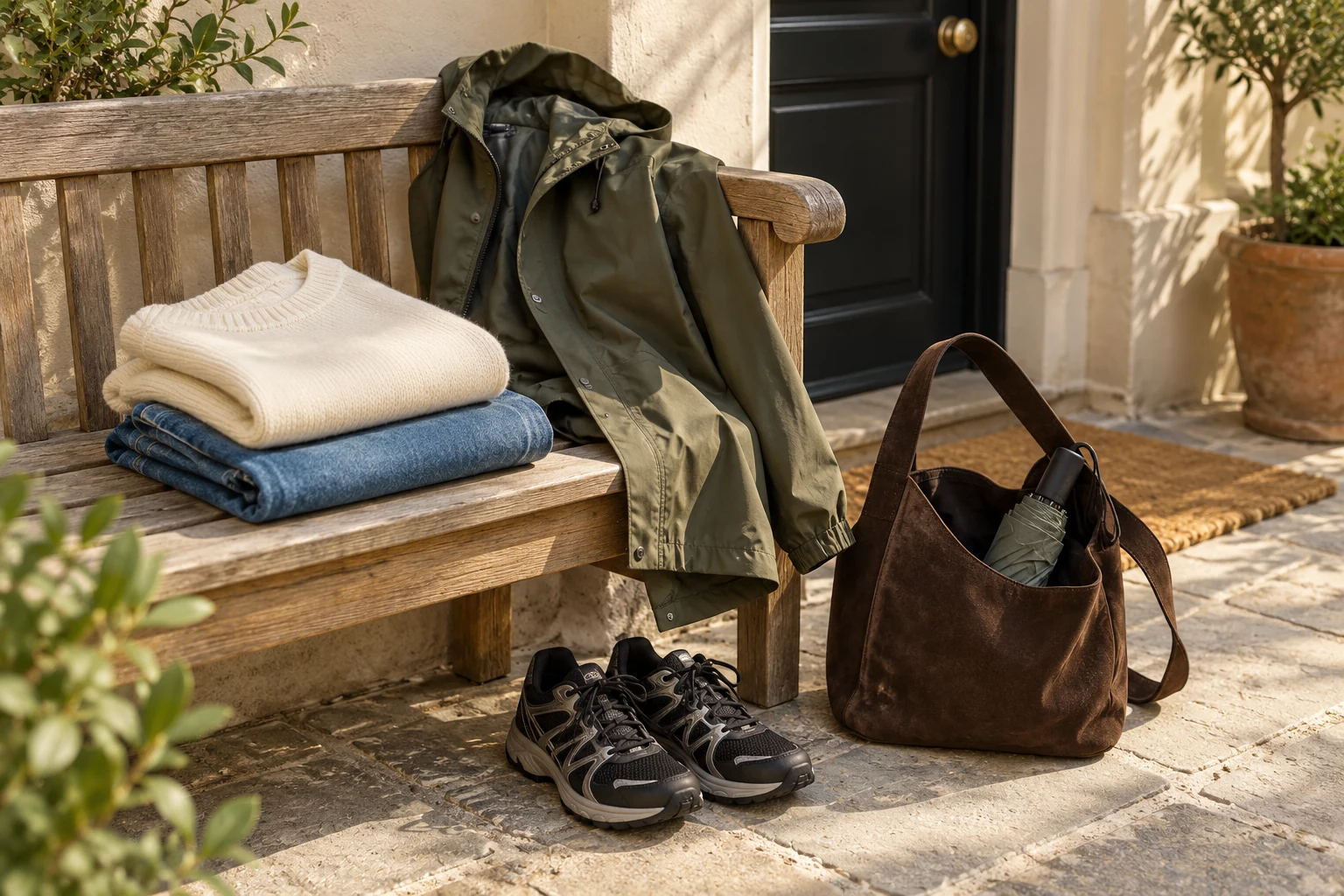
The base
A knit and jeans can suit informal plans. Begin with a different base if the day has a dress requirement.
The change in weather
A removable layer and compact umbrella leave room for changing conditions. Check the actual garment’s weather protection.
The time on your feet
Choose the shoe for your longest walk, then make sure it also works for the destination.
Get the context before the clothes.
If there is an invitation, read it. If there is a workplace policy, check it. When neither exists, think about the venue, company and activity. “Dinner” could mean a neighborhood café, a celebration or a formal hosted event.
Give a stylist the details you already know. Mention the dress code, indoor or outdoor setting, time, local forecast and anything you prefer to cover. That information is more useful than asking for a universally perfect outfit.
A precise plan makes styling easier.
Build for the longest part of the day.
Choose the base for what you will spend the most time doing. If it is a walking day, start with shoes. If you will sit through meetings, begin with a comfortable waistband and a top that stays in place.
Then solve the transitions: a layer for cold rooms, a different bag for evening or a shoe you can change into. Avoid making the entire day awkward for a short photo or an imagined version of the plan.
Put comfort where the hours are.
Keep a few ready-made answers.
Save outfits for the days you repeat: a rainy commute, a casual office, dinner with flats and a warm weekend. Photograph the whole outfit, including the layer and shoe.
When the plan changes, start from the nearest saved combination and change only what needs changing. That is how an outfit library becomes useful: fewer decisions, with enough variety to feel like yourself.
Make tomorrow easier while today’s good outfit is still on.
Four details that make the decision easier.
A little context makes the outfit decision easier.
| Ask yourself | Why it matters | An example |
|---|---|---|
| What is the occasion? | It establishes formality and coverage | A work meeting and a dinner can need different outfits |
| What is the weather? | It changes fabric, layers and footwear | A warm afternoon can still need an evening coat |
| How will I move? | It determines the useful shoe and hem | Walking and grass favor stable footwear |
| What do I already own? | It keeps the starting point practical | Repeat a familiar base and change one layer |
A little more clarity
Good questions.
How do I choose an outfit when I do not know the dress code?
Ask the host, organizer or workplace. If you cannot get an answer, use the occasion and venue as context and choose an adaptable polished base with an optional layer. Do not assume that a casual venue means a casual event.
Should I choose the shoes or clothes first?
Start with the strongest practical requirement. For a walking day, choose the shoes first. For a specific dress code or garment you must wear, start there and build the rest around it.
What should I tell an AI stylist?
Share the occasion, dress code, weather, walking distance, preferences and any must-wear pieces. Ask for combinations from your saved wardrobe and explain what has not worked before.
How can I stop overthinking what to wear?
Save a few complete outfits for recurring situations. Reuse those bases and change one element when needed. A short list of comfortable combinations is often more useful than more clothes.
Sources & editorial notes
Words and styling: minniie editorial. The outfit examples are independent styling suggestions, not retailer endorsements or evidence of sales rankings. Garment references come from the linked look pages and retailers. Availability and product details can change.
All editorial outfit images are AI-generated illustrations. They cannot guarantee fit, material, color or garment construction. Host instructions, workplace rules, cultural requirements and your comfort take priority over a general guide.