"><g><g clip-path="url(%231b309c4b36)"><g fill="%23ea2303" fill-opacity="1"><g transform="translate(19.57737, 104.511811)"><g><path d="M 53.15625 -42.015625 C 54.164062 -41.691406 54.882812 -41.109375 55.3125 -40.265625 C 55.550781 -39.847656 55.296875 -38.773438 54.546875 -37.046875 C 53.796875 -35.328125 52.835938 -33.320312 51.671875 -31.03125 C 50.515625 -28.738281 49.320312 -26.53125 48.09375 -24.40625 C 44.925781 -18.707031 42.25 -14.367188 40.0625 -11.390625 C 37.882812 -8.410156 35.910156 -6.335938 34.140625 -5.171875 C 32.828125 -4.410156 31.835938 -3.953125 31.171875 -3.796875 C 30.285156 -3.597656 29.285156 -3.726562 28.171875 -4.1875 C 26.828125 -4.582031 25.851562 -5.179688 25.25 -5.984375 C 24.644531 -6.785156 24.160156 -8.003906 23.796875 -9.640625 C 23.460938 -11.117188 23.347656 -12.765625 23.453125 -14.578125 C 23.554688 -16.390625 23.984375 -18.921875 24.734375 -22.171875 C 25.492188 -25.421875 26.648438 -29.863281 28.203125 -35.5 C 28.441406 -36.1875 28.609375 -36.753906 28.703125 -37.203125 C 28.796875 -37.648438 28.851562 -37.988281 28.875 -38.21875 C 28.632812 -37.9375 28.285156 -37.488281 27.828125 -36.875 C 27.378906 -36.269531 26.796875 -35.347656 26.078125 -34.109375 C 25.429688 -33.109375 24.769531 -32.023438 24.09375 -30.859375 C 23.414062 -29.691406 22.910156 -28.796875 22.578125 -28.171875 C 22.316406 -27.640625 21.835938 -26.554688 21.140625 -24.921875 C 20.453125 -23.296875 19.6875 -21.394531 18.84375 -19.21875 C 18 -17.039062 17.175781 -14.867188 16.375 -12.703125 C 15.582031 -10.546875 14.9375 -8.671875 14.4375 -7.078125 C 13.476562 -4.367188 12.425781 -2.765625 11.28125 -2.265625 C 10.59375 -1.878906 9.867188 -1.835938 9.109375 -2.140625 C 8.066406 -2.609375 7.382812 -3.21875 7.0625 -3.96875 C 6.738281 -4.71875 6.726562 -5.984375 7.03125 -7.765625 C 7.332031 -9.546875 7.921875 -12.171875 8.796875 -15.640625 C 9.023438 -16.691406 9.351562 -18.085938 9.78125 -19.828125 C 10.21875 -21.566406 10.632812 -23.375 11.03125 -25.25 C 11.425781 -27.132812 11.75 -28.820312 12 -30.3125 C 12.257812 -31.8125 12.320312 -32.859375 12.1875 -33.453125 C 11.320312 -32.785156 9.757812 -30.351562 7.5 -26.15625 C 5.238281 -21.957031 2.851562 -16.578125 0.34375 -10.015625 C -1.476562 -5.242188 -2.867188 -2.046875 -3.828125 -0.421875 C -4.796875 1.191406 -6.132812 1.679688 -7.84375 1.046875 C -9.207031 0.492188 -9.945312 -0.660156 -10.0625 -2.421875 C -10.175781 -4.191406 -9.984375 -6.726562 -9.484375 -10.03125 C -9.171875 -11.75 -8.722656 -13.9375 -8.140625 -16.59375 C -7.566406 -19.25 -6.953125 -21.992188 -6.296875 -24.828125 C -5.640625 -27.671875 -5 -30.234375 -4.375 -32.515625 C -3.757812 -34.796875 -3.273438 -36.363281 -2.921875 -37.21875 C -2.210938 -38.9375 -1.320312 -40.023438 -0.25 -40.484375 C 0.53125 -40.828125 1.28125 -40.765625 2 -40.296875 C 2.851562 -39.953125 3.378906 -39.253906 3.578125 -38.203125 C 3.773438 -37.148438 3.609375 -35.898438 3.078125 -34.453125 C 2.867188 -33.941406 2.664062 -33.332031 2.46875 -32.625 C 2.28125 -31.925781 2.066406 -31.238281 1.828125 -30.5625 C 1.953125 -30.75 2.039062 -30.882812 2.09375 -30.96875 C 2.144531 -31.0625 2.203125 -31.15625 2.265625 -31.25 C 3.054688 -32.59375 3.972656 -33.984375 5.015625 -35.421875 C 6.066406 -36.859375 6.941406 -37.929688 7.640625 -38.640625 C 9.097656 -40.128906 10.46875 -41.132812 11.75 -41.65625 C 13.039062 -42.175781 14.5 -41.914062 16.125 -40.875 C 16.957031 -40.351562 17.546875 -39.835938 17.890625 -39.328125 C 18.234375 -38.828125 18.539062 -37.984375 18.8125 -36.796875 L 18.9375 -36.234375 L 20.40625 -38.5625 C 22.125 -41.289062 23.992188 -43.363281 26.015625 -44.78125 C 28.035156 -46.195312 29.851562 -46.78125 31.46875 -46.53125 C 33.675781 -46.082031 35.101562 -44.410156 35.75 -41.515625 C 35.914062 -40.773438 35.976562 -39.96875 35.9375 -39.09375 C 35.894531 -38.226562 35.675781 -36.929688 35.28125 -35.203125 C 34.882812 -33.484375 34.273438 -30.972656 33.453125 -27.671875 C 32.410156 -23.617188 31.65625 -20.445312 31.1875 -18.15625 C 30.71875 -15.875 30.441406 -14.21875 30.359375 -13.1875 C 30.285156 -12.164062 30.285156 -11.5 30.359375 -11.1875 C 30.835938 -11.46875 31.578125 -12.144531 32.578125 -13.21875 C 33.578125 -14.300781 34.640625 -15.664062 35.765625 -17.3125 C 36.367188 -18.070312 37.234375 -19.414062 38.359375 -21.34375 C 39.492188 -23.269531 40.59375 -25.171875 41.65625 -27.046875 C 41.988281 -27.671875 42.570312 -28.71875 43.40625 -30.1875 C 44.25 -31.65625 45.160156 -33.238281 46.140625 -34.9375 C 47.128906 -36.644531 48.023438 -38.132812 48.828125 -39.40625 C 49.640625 -40.675781 50.15625 -41.375 50.375 -41.5 C 51.394531 -42.113281 52.320312 -42.285156 53.15625 -42.015625 Z M 53.15625 -42.015625 "/></g></g></g><g fill="%23ea2303" fill-opacity="1"><g transform="translate(74.136674, 92.348939)"><g><path d="M 18.890625 -34.828125 C 19.859375 -35.046875 20.753906 -34.953125 21.578125 -34.546875 C 22.410156 -34.148438 22.941406 -33.429688 23.171875 -32.390625 C 23.265625 -31.941406 22.972656 -30.785156 22.296875 -28.921875 C 21.617188 -27.066406 20.742188 -24.960938 19.671875 -22.609375 C 18.597656 -20.265625 17.503906 -18.015625 16.390625 -15.859375 C 15.273438 -13.703125 14.375 -12.078125 13.6875 -10.984375 C 9.8125 -4.910156 5.796875 -1.410156 1.640625 -0.484375 C -0.210938 -0.0664062 -1.75 -0.15625 -2.96875 -0.75 C -5.6875 -2.09375 -7.316406 -4.6875 -7.859375 -8.53125 C -8.410156 -12.382812 -7.84375 -17.691406 -6.15625 -24.453125 C -5.613281 -26.597656 -4.925781 -28.953125 -4.09375 -31.515625 C -3.269531 -34.078125 -2.421875 -36.367188 -1.546875 -38.390625 C -0.671875 -40.421875 0.0195312 -41.6875 0.53125 -42.1875 C 0.988281 -42.601562 1.484375 -42.8125 2.015625 -42.8125 C 2.554688 -42.820312 3 -42.785156 3.34375 -42.703125 C 4.144531 -42.578125 4.6875 -42.3125 4.96875 -41.90625 C 5.257812 -41.5 5.5 -40.890625 5.6875 -40.078125 C 6.03125 -38.523438 5.816406 -37.539062 5.046875 -37.125 C 4.796875 -36.84375 4.242188 -35.472656 3.390625 -33.015625 C 2.535156 -30.554688 1.679688 -27.753906 0.828125 -24.609375 C -0.296875 -19.835938 -0.921875 -16 -1.046875 -13.09375 C -1.171875 -10.1875 -1 -8.351562 -0.53125 -7.59375 C -0.21875 -7.269531 -0.0625 -7.109375 -0.0625 -7.109375 C -0.0625 -7.109375 -0.0234375 -7.113281 0.046875 -7.125 C 0.117188 -7.144531 0.296875 -7.226562 0.578125 -7.375 C 4.242188 -9.125 8.300781 -14.507812 12.75 -23.53125 C 13.4375 -25 14.15625 -26.578125 14.90625 -28.265625 C 15.664062 -29.953125 16.390625 -31.4375 17.078125 -32.71875 C 17.765625 -34.007812 18.367188 -34.710938 18.890625 -34.828125 Z M 5.359375 -45.71875 C 4.316406 -45.488281 3.34375 -45.664062 2.4375 -46.25 C 0.40625 -47.65625 0.0664062 -49.679688 1.421875 -52.328125 C 1.847656 -53.203125 2.296875 -53.804688 2.765625 -54.140625 C 3.242188 -54.484375 3.976562 -54.6875 4.96875 -54.75 C 5.800781 -54.863281 6.5 -54.882812 7.0625 -54.8125 C 7.625 -54.738281 8.171875 -54.367188 8.703125 -53.703125 C 9.523438 -52.878906 9.859375 -51.84375 9.703125 -50.59375 C 9.546875 -49.351562 8.921875 -48.222656 7.828125 -47.203125 C 6.921875 -46.378906 6.097656 -45.882812 5.359375 -45.71875 Z M 5.359375 -45.71875 "/></g></g></g><g fill="%23ea2303" fill-opacity="1"><g transform="translate(96.851152, 87.285214)"><g><path d="M 38.28125 -39.046875 C 39.09375 -39.222656 39.945312 -39.039062 40.84375 -38.5 C 41.75 -37.96875 42.28125 -37.328125 42.4375 -36.578125 C 42.539062 -36.128906 42.222656 -35.039062 41.484375 -33.3125 C 40.742188 -31.59375 39.785156 -29.609375 38.609375 -27.359375 C 37.429688 -25.117188 36.242188 -22.925781 35.046875 -20.78125 C 33.847656 -18.644531 32.847656 -16.941406 32.046875 -15.671875 C 27.835938 -9.046875 24.023438 -5.351562 20.609375 -4.59375 C 19.347656 -4.3125 18.082031 -4.378906 16.8125 -4.796875 C 14.53125 -5.609375 12.984375 -7.304688 12.171875 -9.890625 C 11.359375 -12.484375 11.394531 -15.632812 12.28125 -19.34375 C 12.570312 -20.5 12.96875 -21.96875 13.46875 -23.75 C 13.96875 -25.53125 14.4375 -27.171875 14.875 -28.671875 C 15.125 -29.273438 15.3125 -29.828125 15.4375 -30.328125 C 15.5625 -30.828125 15.707031 -31.242188 15.875 -31.578125 C 14.789062 -30.179688 13.078125 -27.722656 10.734375 -24.203125 C 8.398438 -20.679688 5.375 -15.738281 1.65625 -9.375 C -0.40625 -6.03125 -1.660156 -3.523438 -2.109375 -1.859375 C -2.566406 -0.203125 -3.125 0.695312 -3.78125 0.84375 C -6.457031 1.4375 -8.050781 0.582031 -8.5625 -1.71875 C -8.71875 -2.382812 -8.742188 -3.640625 -8.640625 -5.484375 C -8.546875 -7.335938 -8.347656 -9.503906 -8.046875 -11.984375 C -7.753906 -14.472656 -7.375 -17.035156 -6.90625 -19.671875 C -6.4375 -22.304688 -5.867188 -24.753906 -5.203125 -27.015625 C -4.597656 -29.160156 -4.035156 -31.09375 -3.515625 -32.8125 C -3.003906 -34.53125 -2.734375 -35.515625 -2.703125 -35.765625 C -2.015625 -37.921875 -1.066406 -39.253906 0.140625 -39.765625 C 0.921875 -40.097656 1.765625 -39.976562 2.671875 -39.40625 C 3.316406 -39 3.695312 -38.421875 3.8125 -37.671875 C 3.9375 -36.921875 3.820312 -35.6875 3.46875 -33.96875 C 3.113281 -32.25 2.53125 -29.738281 1.71875 -26.4375 C 1.394531 -25.351562 1.113281 -24.316406 0.875 -23.328125 C 0.632812 -22.335938 0.40625 -21.429688 0.1875 -20.609375 C 0.65625 -21.335938 1.207031 -22.203125 1.84375 -23.203125 C 2.476562 -24.203125 3.140625 -25.25 3.828125 -26.34375 C 7.359375 -31.800781 10.097656 -35.660156 12.046875 -37.921875 C 14.003906 -40.191406 15.769531 -41.460938 17.34375 -41.734375 C 18.539062 -41.921875 19.75 -41.566406 20.96875 -40.671875 C 21.738281 -40.066406 22.253906 -39.5 22.515625 -38.96875 C 22.785156 -38.4375 22.984375 -37.523438 23.109375 -36.234375 C 23.328125 -34.648438 23.273438 -32.984375 22.953125 -31.234375 C 22.640625 -29.492188 21.859375 -26.882812 20.609375 -23.40625 C 19.515625 -20.28125 18.890625 -17.566406 18.734375 -15.265625 C 18.578125 -12.972656 18.695312 -11.675781 19.09375 -11.375 C 20.125 -11.601562 21.679688 -13.082031 23.765625 -15.8125 C 25.847656 -18.539062 27.960938 -22.085938 30.109375 -26.453125 C 33.921875 -34.484375 36.644531 -38.679688 38.28125 -39.046875 Z M 38.28125 -39.046875 "/></g></g></g><g fill="%23ea2303" fill-opacity="1"><g transform="translate(137.937655, 78.125825)"><g><path d="M 38.28125 -39.046875 C 39.09375 -39.222656 39.945312 -39.039062 40.84375 -38.5 C 41.75 -37.96875 42.28125 -37.328125 42.4375 -36.578125 C 42.539062 -36.128906 42.222656 -35.039062 41.484375 -33.3125 C 40.742188 -31.59375 39.785156 -29.609375 38.609375 -27.359375 C 37.429688 -25.117188 36.242188 -22.925781 35.046875 -20.78125 C 33.847656 -18.644531 32.847656 -16.941406 32.046875 -15.671875 C 27.835938 -9.046875 24.023438 -5.351562 20.609375 -4.59375 C 19.347656 -4.3125 18.082031 -4.378906 16.8125 -4.796875 C 14.53125 -5.609375 12.984375 -7.304688 12.171875 -9.890625 C 11.359375 -12.484375 11.394531 -15.632812 12.28125 -19.34375 C 12.570312 -20.5 12.96875 -21.96875 13.46875 -23.75 C 13.96875 -25.53125 14.4375 -27.171875 14.875 -28.671875 C 15.125 -29.273438 15.3125 -29.828125 15.4375 -30.328125 C 15.5625 -30.828125 15.707031 -31.242188 15.875 -31.578125 C 14.789062 -30.179688 13.078125 -27.722656 10.734375 -24.203125 C 8.398438 -20.679688 5.375 -15.738281 1.65625 -9.375 C -0.40625 -6.03125 -1.660156 -3.523438 -2.109375 -1.859375 C -2.566406 -0.203125 -3.125 0.695312 -3.78125 0.84375 C -6.457031 1.4375 -8.050781 0.582031 -8.5625 -1.71875 C -8.71875 -2.382812 -8.742188 -3.640625 -8.640625 -5.484375 C -8.546875 -7.335938 -8.347656 -9.503906 -8.046875 -11.984375 C -7.753906 -14.472656 -7.375 -17.035156 -6.90625 -19.671875 C -6.4375 -22.304688 -5.867188 -24.753906 -5.203125 -27.015625 C -4.597656 -29.160156 -4.035156 -31.09375 -3.515625 -32.8125 C -3.003906 -34.53125 -2.734375 -35.515625 -2.703125 -35.765625 C -2.015625 -37.921875 -1.066406 -39.253906 0.140625 -39.765625 C 0.921875 -40.097656 1.765625 -39.976562 2.671875 -39.40625 C 3.316406 -39 3.695312 -38.421875 3.8125 -37.671875 C 3.9375 -36.921875 3.820312 -35.6875 3.46875 -33.96875 C 3.113281 -32.25 2.53125 -29.738281 1.71875 -26.4375 C 1.394531 -25.351562 1.113281 -24.316406 0.875 -23.328125 C 0.632812 -22.335938 0.40625 -21.429688 0.1875 -20.609375 C 0.65625 -21.335938 1.207031 -22.203125 1.84375 -23.203125 C 2.476562 -24.203125 3.140625 -25.25 3.828125 -26.34375 C 7.359375 -31.800781 10.097656 -35.660156 12.046875 -37.921875 C 14.003906 -40.191406 15.769531 -41.460938 17.34375 -41.734375 C 18.539062 -41.921875 19.75 -41.566406 20.96875 -40.671875 C 21.738281 -40.066406 22.253906 -39.5 22.515625 -38.96875 C 22.785156 -38.4375 22.984375 -37.523438 23.109375 -36.234375 C 23.328125 -34.648438 23.273438 -32.984375 22.953125 -31.234375 C 22.640625 -29.492188 21.859375 -26.882812 20.609375 -23.40625 C 19.515625 -20.28125 18.890625 -17.566406 18.734375 -15.265625 C 18.578125 -12.972656 18.695312 -11.675781 19.09375 -11.375 C 20.125 -11.601562 21.679688 -13.082031 23.765625 -15.8125 C 25.847656 -18.539062 27.960938 -22.085938 30.109375 -26.453125 C 33.921875 -34.484375 36.644531 -38.679688 38.28125 -39.046875 Z M 38.28125 -39.046875 "/></g></g></g><g fill="%23ea2303" fill-opacity="1"><g transform="translate(179.024157, 68.966436)"><g><path d="M 18.890625 -34.828125 C 19.859375 -35.046875 20.753906 -34.953125 21.578125 -34.546875 C 22.410156 -34.148438 22.941406 -33.429688 23.171875 -32.390625 C 23.265625 -31.941406 22.972656 -30.785156 22.296875 -28.921875 C 21.617188 -27.066406 20.742188 -24.960938 19.671875 -22.609375 C 18.597656 -20.265625 17.503906 -18.015625 16.390625 -15.859375 C 15.273438 -13.703125 14.375 -12.078125 13.6875 -10.984375 C 9.8125 -4.910156 5.796875 -1.410156 1.640625 -0.484375 C -0.210938 -0.0664062 -1.75 -0.15625 -2.96875 -0.75 C -5.6875 -2.09375 -7.316406 -4.6875 -7.859375 -8.53125 C -8.410156 -12.382812 -7.84375 -17.691406 -6.15625 -24.453125 C -5.613281 -26.597656 -4.925781 -28.953125 -4.09375 -31.515625 C -3.269531 -34.078125 -2.421875 -36.367188 -1.546875 -38.390625 C -0.671875 -40.421875 0.0195312 -41.6875 0.53125 -42.1875 C 0.988281 -42.601562 1.484375 -42.8125 2.015625 -42.8125 C 2.554688 -42.820312 3 -42.785156 3.34375 -42.703125 C 4.144531 -42.578125 4.6875 -42.3125 4.96875 -41.90625 C 5.257812 -41.5 5.5 -40.890625 5.6875 -40.078125 C 6.03125 -38.523438 5.816406 -37.539062 5.046875 -37.125 C 4.796875 -36.84375 4.242188 -35.472656 3.390625 -33.015625 C 2.535156 -30.554688 1.679688 -27.753906 0.828125 -24.609375 C -0.296875 -19.835938 -0.921875 -16 -1.046875 -13.09375 C -1.171875 -10.1875 -1 -8.351562 -0.53125 -7.59375 C -0.21875 -7.269531 -0.0625 -7.109375 -0.0625 -7.109375 C -0.0625 -7.109375 -0.0234375 -7.113281 0.046875 -7.125 C 0.117188 -7.144531 0.296875 -7.226562 0.578125 -7.375 C 4.242188 -9.125 8.300781 -14.507812 12.75 -23.53125 C 13.4375 -25 14.15625 -26.578125 14.90625 -28.265625 C 15.664062 -29.953125 16.390625 -31.4375 17.078125 -32.71875 C 17.765625 -34.007812 18.367188 -34.710938 18.890625 -34.828125 Z M 5.359375 -45.71875 C 4.316406 -45.488281 3.34375 -45.664062 2.4375 -46.25 C 0.40625 -47.65625 0.0664062 -49.679688 1.421875 -52.328125 C 1.847656 -53.203125 2.296875 -53.804688 2.765625 -54.140625 C 3.242188 -54.484375 3.976562 -54.6875 4.96875 -54.75 C 5.800781 -54.863281 6.5 -54.882812 7.0625 -54.8125 C 7.625 -54.738281 8.171875 -54.367188 8.703125 -53.703125 C 9.523438 -52.878906 9.859375 -51.84375 9.703125 -50.59375 C 9.546875 -49.351562 8.921875 -48.222656 7.828125 -47.203125 C 6.921875 -46.378906 6.097656 -45.882812 5.359375 -45.71875 Z M 5.359375 -45.71875 "/></g></g></g><g fill="%23ea2303" fill-opacity="1"><g transform="translate(201.738636, 63.902711)"><g><path d="M 18.890625 -34.828125 C 19.859375 -35.046875 20.753906 -34.953125 21.578125 -34.546875 C 22.410156 -34.148438 22.941406 -33.429688 23.171875 -32.390625 C 23.265625 -31.941406 22.972656 -30.785156 22.296875 -28.921875 C 21.617188 -27.066406 20.742188 -24.960938 19.671875 -22.609375 C 18.597656 -20.265625 17.503906 -18.015625 16.390625 -15.859375 C 15.273438 -13.703125 14.375 -12.078125 13.6875 -10.984375 C 9.8125 -4.910156 5.796875 -1.410156 1.640625 -0.484375 C -0.210938 -0.0664062 -1.75 -0.15625 -2.96875 -0.75 C -5.6875 -2.09375 -7.316406 -4.6875 -7.859375 -8.53125 C -8.410156 -12.382812 -7.84375 -17.691406 -6.15625 -24.453125 C -5.613281 -26.597656 -4.925781 -28.953125 -4.09375 -31.515625 C -3.269531 -34.078125 -2.421875 -36.367188 -1.546875 -38.390625 C -0.671875 -40.421875 0.0195312 -41.6875 0.53125 -42.1875 C 0.988281 -42.601562 1.484375 -42.8125 2.015625 -42.8125 C 2.554688 -42.820312 3 -42.785156 3.34375 -42.703125 C 4.144531 -42.578125 4.6875 -42.3125 4.96875 -41.90625 C 5.257812 -41.5 5.5 -40.890625 5.6875 -40.078125 C 6.03125 -38.523438 5.816406 -37.539062 5.046875 -37.125 C 4.796875 -36.84375 4.242188 -35.472656 3.390625 -33.015625 C 2.535156 -30.554688 1.679688 -27.753906 0.828125 -24.609375 C -0.296875 -19.835938 -0.921875 -16 -1.046875 -13.09375 C -1.171875 -10.1875 -1 -8.351562 -0.53125 -7.59375 C -0.21875 -7.269531 -0.0625 -7.109375 -0.0625 -7.109375 C -0.0625 -7.109375 -0.0234375 -7.113281 0.046875 -7.125 C 0.117188 -7.144531 0.296875 -7.226562 0.578125 -7.375 C 4.242188 -9.125 8.300781 -14.507812 12.75 -23.53125 C 13.4375 -25 14.15625 -26.578125 14.90625 -28.265625 C 15.664062 -29.953125 16.390625 -31.4375 17.078125 -32.71875 C 17.765625 -34.007812 18.367188 -34.710938 18.890625 -34.828125 Z M 5.359375 -45.71875 C 4.316406 -45.488281 3.34375 -45.664062 2.4375 -46.25 C 0.40625 -47.65625 0.0664062 -49.679688 1.421875 -52.328125 C 1.847656 -53.203125 2.296875 -53.804688 2.765625 -54.140625 C 3.242188 -54.484375 3.976562 -54.6875 4.96875 -54.75 C 5.800781 -54.863281 6.5 -54.882812 7.0625 -54.8125 C 7.625 -54.738281 8.171875 -54.367188 8.703125 -53.703125 C 9.523438 -52.878906 9.859375 -51.84375 9.703125 -50.59375 C 9.546875 -49.351562 8.921875 -48.222656 7.828125 -47.203125 C 6.921875 -46.378906 6.097656 -45.882812 5.359375 -45.71875 Z M 5.359375 -45.71875 "/></g></g></g><g clip-path="url(%23794b81fe3f)"><g fill="%23ea2303" fill-opacity="1"><g transform="translate(224.453114, 58.838986)"><g><path d="M 28.484375 -36.859375 C 30.628906 -37.335938 31.941406 -36.5 32.421875 -34.34375 C 32.554688 -33.75 32.253906 -32.585938 31.515625 -30.859375 C 30.773438 -29.140625 29.765625 -27.125 28.484375 -24.8125 C 27.203125 -22.507812 25.8125 -20.175781 24.3125 -17.8125 C 22.8125 -15.445312 21.351562 -13.328125 19.9375 -11.453125 C 18.519531 -9.578125 17.332031 -8.1875 16.375 -7.28125 C 13.082031 -4.207031 9.953125 -2.335938 6.984375 -1.671875 C 6.460938 -1.554688 5.945312 -1.5 5.4375 -1.5 C 4.9375 -1.5 4.457031 -1.492188 4 -1.484375 C -0.757812 -1.816406 -4.210938 -4.203125 -6.359375 -8.640625 C -7.421875 -10.890625 -7.847656 -13.734375 -7.640625 -17.171875 C -7.429688 -20.609375 -6.601562 -24.164062 -5.15625 -27.84375 C -4.570312 -29.363281 -3.765625 -31.054688 -2.734375 -32.921875 C -1.703125 -34.796875 -0.632812 -36.5625 0.46875 -38.21875 C 1.582031 -39.875 2.566406 -41.066406 3.421875 -41.796875 C 4.503906 -42.890625 5.816406 -43.722656 7.359375 -44.296875 C 8.898438 -44.878906 10.207031 -45.054688 11.28125 -44.828125 C 14.1875 -44.378906 16.054688 -42.8125 16.890625 -40.125 C 17.609375 -37.945312 17.523438 -35.507812 16.640625 -32.8125 C 15.753906 -30.113281 14.242188 -27.632812 12.109375 -25.375 C 8.117188 -21.207031 3.972656 -19.539062 -0.328125 -20.375 C -0.328125 -20.375 -0.398438 -19.8125 -0.546875 -18.6875 C -0.972656 -14.695312 -0.507812 -11.921875 0.84375 -10.359375 C 2 -8.972656 3.347656 -8.335938 4.890625 -8.453125 C 6.398438 -8.628906 8.234375 -9.753906 10.390625 -11.828125 C 12.546875 -13.910156 14.789062 -16.613281 17.125 -19.9375 C 19.457031 -23.269531 21.695312 -26.929688 23.84375 -30.921875 C 25 -33.035156 25.875 -34.507812 26.46875 -35.34375 C 27.070312 -36.1875 27.742188 -36.691406 28.484375 -36.859375 Z M 4.78125 -32.046875 C 4.03125 -30.859375 3.425781 -29.804688 2.96875 -28.890625 C 2.507812 -27.972656 2.210938 -27.300781 2.078125 -26.875 C 2.390625 -26.875 2.882812 -27.003906 3.5625 -27.265625 C 4.25 -27.535156 5.023438 -28 5.890625 -28.65625 C 7.023438 -29.539062 8.0625 -30.847656 9 -32.578125 C 9.9375 -34.304688 10.367188 -35.664062 10.296875 -36.65625 C 10.359375 -37.0625 10.375 -37.335938 10.34375 -37.484375 C 10.3125 -37.628906 10.285156 -37.742188 10.265625 -37.828125 C 10.191406 -37.816406 10.0625 -37.789062 9.875 -37.75 C 9.6875 -37.707031 9.457031 -37.609375 9.1875 -37.453125 C 8.625 -37.179688 7.90625 -36.457031 7.03125 -35.28125 C 6.164062 -34.113281 5.414062 -33.035156 4.78125 -32.046875 Z M 4.78125 -32.046875 "/></g></g></g></g></g></g></g></svg>)
The short answer
What is business casual?
Business casual is a workplace dress code that combines professional-looking clothes with a less formal finish than a matching suit. Tailored trousers, chinos, shirts, blouses, fine knits and polished shoes are common starting points. Jeans, sneakers and open shoes depend on the employer’s policy; check that before planning the outfit.
Three ways to feel ready.
Compare the silhouettes, fabrics and finishing touches. Choose an outfit to see the styling notes and garment references.

Creative workdays · relaxed meetings
A shorter jacket. A wider leg.
Lana keeps the jacket short and lets the navy trousers take up space. A white tee breaks up the darker layers; sandstone boat loafers and a woven tote soften the finish. This is a relaxed workplace option where tees and suede-style jackets are welcome.
- Keep
- The cropped jacket and generous trouser shape.
- Try
- Use a shorter outer layer to reveal the trouser rise without tightening the whole outfit.
The real garment references
- ZaraCropped faux suede jacketBrown · 4968/224/700
- COSClean Cut T-shirtWhite
- COSRelaxed twill wide-leg pantsNavy
- SézaneCaroline LoafersSandstone
- ARKETRaffia Tote BagBeige
References from our editorial look library. Availability changes; check the exact retailer variant, sizes and original photographs. Accessories without a product link are styling suggestions.

Work-adjacent lunches · everyday plans
Navy, with room to move.
Noelle pairs a loose navy merino tee with wide navy pleated trousers. The pale sandstone loafers give the dark column a light ending; the black suede tote stays quiet. A small tuck shows the waistband without losing the loose sleeve and generous leg.
- Keep
- The navy column and roomy proportions.
- Try
- Lighten the shoe instead of adding another bright colour near the face.
The real garment references
- COSKnitted merino wool T-shirtNavyArchive reference · check current availability
- COSRelaxed twill wide-leg pantsNavy
- SézaneCaroline LoafersSandstone
- ARKETSuede Tote BagBlack
References from our editorial look library. Availability changes; check the exact retailer variant, sizes and original photographs. Accessories without a product link are styling suggestions.
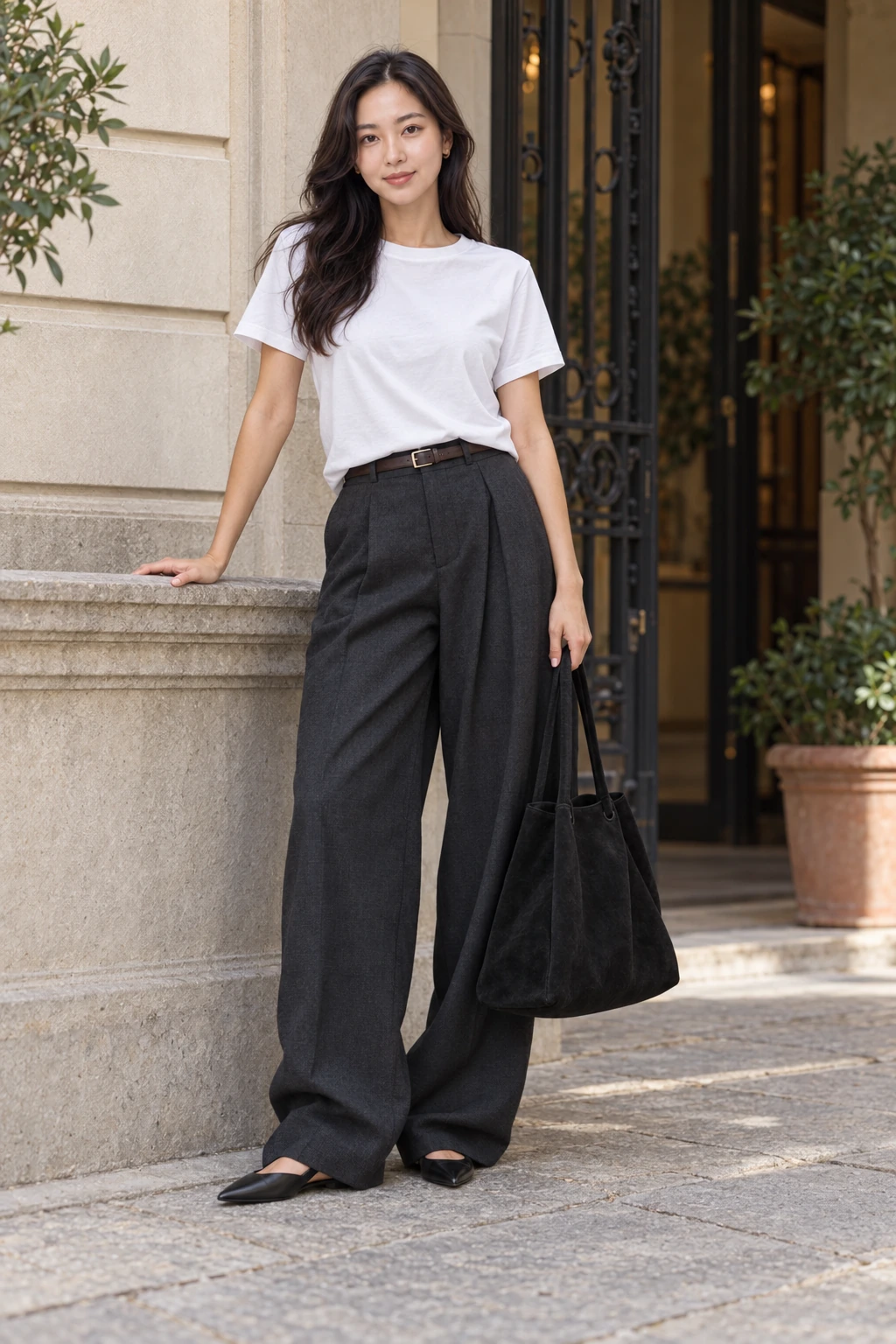
An informal office · an afternoon in town
A tee. A little tailoring.
Hana tucks a simple white tee into very wide charcoal trousers and finishes with pointed black flats. The slim brown belt marks the waist; the suede tote holds the practical side of the day. The interest is in the sleeve width, pleat and long hem, rather than another layer.
- Keep
- The roomy tee and wide charcoal trousers.
- Try
- Keep the tee relaxed through the sleeves, then tuck only enough to show the rise.
The real garment references
- COSClean Cut T-shirtWhite
- COSRelaxed Twill Wide-Leg PantsDark grey
- & Other StoriesPointed Leather Ballerina FlatsBlackArchive reference · check current availability
- ARKETSuede Tote BagBlack
References from our editorial look library. Availability changes; check the exact retailer variant, sizes and original photographs. Accessories without a product link are styling suggestions.
Let the knit fall.
A long cream knit over fluid chocolate trousers. Leave the hem loose and let a pointed shoe define the ending.
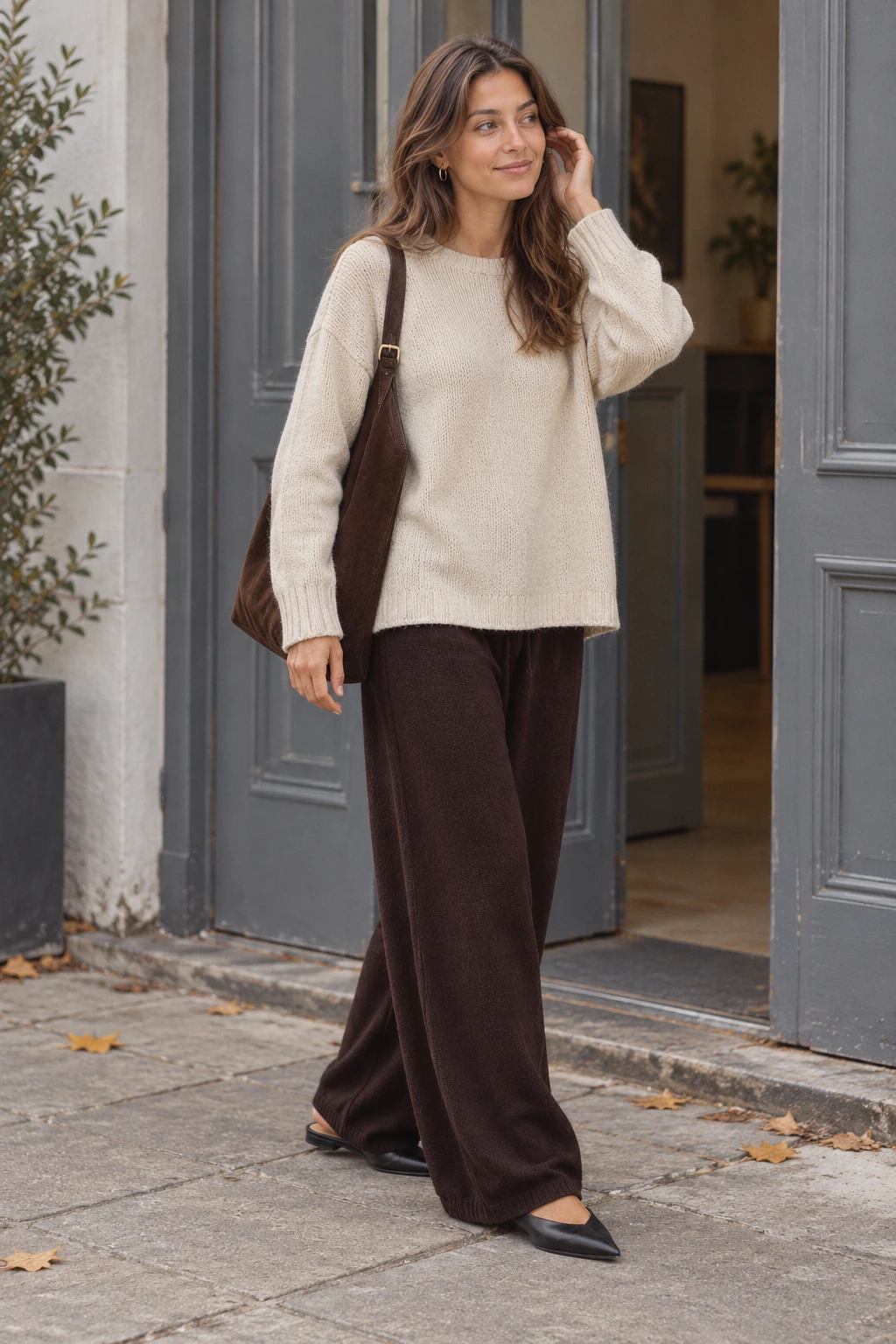
Keep
The long knit and fluid chocolate trousers.
Change
Try the hem untucked first. Keep the shoe visible and shorten a trouser hem that catches underfoot.
Keep the shoe in view
The full hem should skim the shoe without catching beneath your heel.
Let the workplace set the starting point.
Business casual is a category, not a universal uniform. A financial-services office and a design studio can use the same wording while expecting different clothes. Read the written policy, look at the team’s everyday outfits and ask about specific meetings.
For a first day, an interview or a client presentation, begin a little more polished. You can remove an optional layer when you understand the room. Avoid assuming that a casual Friday policy applies all week.
One useful question: “Are dark jeans and clean sneakers appropriate here?”
Balance ease with definition.
Choose one piece that gives the outfit structure: a collar, a tailored trouser or a clean-lined jacket. The other pieces can feel softer. An oversized shirt often works best with a visible waistband or a controlled hem, rather than several long loose layers competing.
Try the outfit seated as well as standing. Check whether the shirt pulls, the skirt rides up or the waistband feels restrictive. Comfortable movement matters more than choosing a silhouette described as universally flattering.
A relaxed fit can still look intentional.
Make a workweek from a few favorites.
Pick two bottoms and three tops you enjoy wearing. Try each top with both bottoms before adding another purchase. Repeat the shoes and bag, then change a layer or one color to make the days feel different.
Keep a meeting-ready layer at hand if your schedule changes. For weather, adjust the cloth and shoes: breathable shirts in heat, fine knits and boots in cold, with enough room beneath your coat.
Begin with the clothes that already get you through a full day.
Know which version your office means.
A little context makes the outfit decision easier.
| Setting | A useful starting point | Check first |
|---|---|---|
| Conservative office | Shirt or blouse, tailored trousers, closed shoes | Whether a jacket is expected for meetings |
| Relaxed office | Fine knit, chinos or trousers, clean leather shoes | Whether denim and sneakers are permitted |
| Client-facing day | A structured layer over a simple base | The client’s expectations as well as your own office policy |
A little more clarity
Good questions.
Are jeans business casual?
Sometimes. Dark, non-distressed jeans are accepted in some workplaces and excluded in others. Follow the employer’s dress policy; tailored trousers are a more reliable starting point when you are unsure.
Can sneakers be business casual?
Some offices allow clean, understated sneakers. Others require dress shoes. A sneaker does not become office-appropriate simply because it is expensive or leather.
Do I need a blazer for business casual?
Not always. A shirt, blouse or fine knit with suitable trousers may be enough. Keep a structured layer available when the meeting or employer calls for more formality.
Is business casual the same as smart casual?
They overlap, but business casual is anchored to workplace expectations. Smart casual is also used for restaurants and social plans, where there may be more room for denim, texture and expressive styling.
Sources & editorial notes
UCLA Career Center · A beginner’s guide to business attire ↗
Career-event guidance on industry and office norms, using familiar pieces at different levels of formality, and when denim is inappropriate. Our combinations are independent styling suggestions.
Words and styling: minniie editorial. The outfit examples are independent styling suggestions, not retailer endorsements or evidence of sales rankings. Garment references come from the linked look pages and retailers. Availability and product details can change.
All editorial outfit images are AI-generated illustrations. They cannot guarantee fit, material, color or garment construction. Host instructions, workplace rules, cultural requirements and your comfort take priority over a general guide.